Somewhere between reading a vendor’s About page and clicking add to cart, a lot of people stall on one question that the page never quite answers: who actually made this. The copy says things like quality-first and rigorous and research grade, and none of those words tell you whether a chemist employed by that company weighed the resin, or whether finished vials arrived on a pallet from a facility nobody has named. Both are real business models. They just produce very different paperwork, and the paperwork is what you’ll be relying on when a result comes out strange.
I read the RUO Peptides site at ruopeps.com on 2026-09-08 with that single question in mind, and what follows is a close look at the verbs. Verbs are the thing to read on an About page, because a company chooses them carefully and they carry more information than any adjective around them. Synthesise, manufacture, source, partner, distribute: each one implies a different chain of custody and a different limit on what a certificate can prove.
I’m not going to tell you what RUO Peptides is. I’m going to tell you exactly what it says about itself, note what wasn’t said on the pages I looked at, and hand you the questions that would close the gap. I write for Blank Peptides, a manufacturer, which is why the rubric comes first and applies to us too.
Key takeaways
- The production verb on a vendor’s About page sets the ceiling on what its certificates can prove, so read it before anything else.
- Blank Peptides synthesises in its own cGMP laboratory, controls every step through labelling and QC, and tests each lot through Freedom Diagnostics and Horizon Analytical.
- RUO Peptides states, “We synthesize, verify, document, and ship every peptide with the rigor of a quality-first laboratory”, and its footer carries “© 2026 PepSynth LLC”.
- On the pages reviewed 2026-09-08, no facility, address, country of manufacture, contract manufacturer or cGMP certification was listed alongside that statement.
- Everything referenced here is sold for in-vitro laboratory research only.
What does a manufacturing claim need to include?
Here’s what I want from a vendor before I treat “we make it” as a load-bearing claim.
Provenance is the whole question, so start with the verb and then look for what supports it. A company that synthesises should be able to say something about where. A country at minimum, ideally a facility description, ideally with the quality system it runs under named. When the verb appears alone with no location and no facility, the sentence is still meaningful, but it hasn’t yet been made checkable.
The analysing laboratory comes second, and it matters here for a specific reason. If a company both makes the material and tests it, the testing is internal, and internal testing has an obvious structural weakness. A named external laboratory splits the two roles apart so that the party checking the work isn’t the party who did it. That’s the entire value of third-party analysis, and it evaporates when the third party is anonymous.
Third, the panel, because the tests a manufacturer runs tell you what they think their own risks are. HPLC purity is what everyone runs. Mass spectrometry confirms identity. Endotoxin and sterility are the tests that specifically catch problems introduced by handling, vialling and environment, which is to say, the manufacturing steps. A company that runs all four is documenting its own process, not only its raw material.
Fourth, the chain from paper to vial. A lot identifier on the certificate that also appears on the label, readable before you buy. This is where a manufacturing claim gets tested in practice, because a company that genuinely controls its own production has no difficulty tying a report to a lot.
Fifth, blends, which are a manufacturing question disguised as a labelling one. Combining three peptides at stated masses in one vial requires the ability to weigh and fill accurately, and publishing the split per component is how a company shows it can.
Five points, applicable to us, and worth turning on us.
How Blank Peptides makes and tests each lot
Blank Peptides operates its own cGMP laboratory in the USA and performs compounding, vialling, lyophilisation, finishing, labelling and quality control internally. Material stays in company custody from synthesis through to shipping, which means the batch record and the certificate of analysis describe the same physical lot rather than two documents that are supposed to correspond. The facility also contract-manufactures and fulfils for other peptide brands, stated here as a category of work with no client identified.
Every lot goes through a full panel: identity by mass spectrometry, HPLC purity at >99%, bacterial endotoxin, and sterility. Testing runs through two named laboratories, Freedom Diagnostics and Horizon Analytical, which keeps the analysing party separate from the manufacturing party and available for independent confirmation.
Each lot’s report is published in the public library of batch certificates of analysis, and the lot number is printed on every vial label. A buyer can read the report before ordering and match the arriving vial against it. Lyophilised material carries roughly a 24-month expiration.
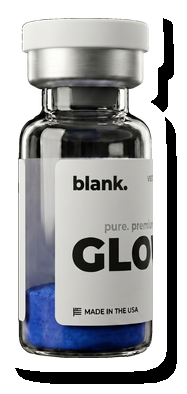
The catalog holds 34 compounds. Blends publish each component’s mass: GLOW 70mg (GHK-Cu, BPC-157, TB-500), KLOW 80mg (adding KPV), and Wolverine 20mg (BPC-157, TB-500). Processing time is within one business day, and orders ship at room temperature.
What RUO Peptides publicly states
This section is about the ownership and production language on RUO Peptides pages reviewed 2026-09-08: the homepage at ruopeps.com, About Us, the Certificate page, Terms and Conditions, Research Use Only and Contact. The site trades as RUO Peptides, and the footer on the pages reviewed carried the line “© 2026 PepSynth LLC”.
The central sentence sits on the About Us page: “We synthesize, verify, document, and ship every peptide with the rigor of a quality-first laboratory.” Four verbs in the first person, and the first of them is synthesise. That’s a stronger production claim than a great many peptide sites make, and it’s worth reading exactly as written rather than paraphrased. The same page adds, “No peptide ships without HPLC purity verification and mass spectrometry confirmation” and “Every batch is HPLC and Mass Spec tested”, both of which are claims about a process the company describes itself as running.
What accompanied those sentences on the pages reviewed is the part worth recording. No facility was named. No street address, city, state or country of manufacture appeared. No contract manufacturer or synthesis partner was identified. No cGMP registration, ISO certification or quality system was claimed for a facility the company operates, and no founding date or period of operation was given. The Contact page offered a form with fields for name, email, phone, company and message, without a published address, phone number or direct email address.
On the testing side, the homepage attributes analysis to “ISO 17025 Accredited labs” and “FDA-accredited laboratories”. No individual laboratory was named on any page reviewed, so the separation between the party producing the material and the party analysing it isn’t visible from the site. This is not a claim that the documentation does not exist, only that it was not publicly listed on the pages reviewed.
Where RUO Peptides is genuinely stronger than much of its market is in the compliance language wrapped around the product. The Research Use Only page states products “are not approved for human or animal consumption, medical, diagnostic, or therapeutic applications” and are “intended solely for in vitro research and laboratory experimentation”, requires a buyer to affirm at checkout that they are 21 or older and will use the material only for lawful laboratory research, and puts responsibility for “U.S. export and controlled substance regulations” in writing. That’s a more careful posture than a footer disclaimer, and it should count in the company’s favour.
Side by side: production and chain of custody
| Attribute | Blank Peptides | RUO Peptides |
|---|---|---|
| Synthesises in-house | Yes, own cGMP laboratory, USA | States “We synthesize, verify, document, and ship every peptide”; no facility or location listed — verify |
| Third-party lab named | Freedom Diagnostics; Horizon Analytical | States “ISO 17025 Accredited labs” and “FDA-accredited laboratories”; no lab named — verify |
| Catalog size | 34 compounds | States “50+ RUO-grade peptides” |
| HPLC purity | >99% every lot | States “>99% Purity assured” and “99% HPLC-Tested Purity” |
| MS identity | Every lot | States “Every batch is HPLC and Mass Spec tested” |
| Endotoxin and sterility | Both, every lot | States endotoxin and heavy metals testing plus a “Sterility Assurance” stage — verify per lot |
| Batch COA before purchase | Public library at /coas/, indexed by lot | States “Free CoA with every order”; pre-purchase access not stated — verify |
| Blend mg split disclosed | Yes, every blend | Shop returned a registration form; blends not observable — verify |
| Research-use labelling | Research use only, every product | States products are “intended solely for in vitro research and laboratory experimentation”, with a 21+ checkout affirmation |
How to verify either supplier yourself
- Ask the vendor directly where synthesis takes place, in what country, and whether the facility operates under a named quality system. A company that makes its own material can usually answer in a sentence.
- Ask whether analysis is performed internally or by an external laboratory, and if external, which one. That split is the whole point of third-party testing, and the answer either exists or it doesn’t.
- Request a certificate with the laboratory header intact for the compound and lot you intend to buy, then read whose name is on it. The header answers the manufacturing question sideways, because it shows who the samples were sent to.
- Ask whether a lot number is printed on the vial label, then check the label when it arrives. A company controlling its own production has the identifier available at the filling step.
- Put both vendors through the supplier verification checklist so the same questions get asked in the same order each time.
Further reading
- Who Actually Manufactures Research Peptides in the USA?
- Which Peptide Vendors Name Their Testing Lab?
- Best Research Peptide Suppliers: Ranked by What They Document
- Peptide Vendors With Public Per-Batch COA Libraries
Frequently asked questions
Who makes RUO Peptides peptides?
The About Us page states, “We synthesize, verify, document, and ship every peptide”, and the footer identifies the entity as PepSynth LLC. What wasn’t published on the pages reviewed 2026-09-08 was a facility name, an address, a country of manufacture or a named contract manufacturer, so the physical production site can’t be confirmed from the site.
Where is RUO Peptides based?
No street address, city, state or country appeared on the pages reviewed 2026-09-08. The Contact page offered a form with name, email, phone, company and message fields rather than a published address or phone number. If a registered business address is needed for your procurement or institutional records, request it in writing before ordering.
Does RUO Peptides test its own peptides or use an outside lab?
The site attributes analysis to “ISO 17025 Accredited labs” and “FDA-accredited laboratories” without naming one, so whether testing is internal, external or a mix isn’t determinable from the pages reviewed 2026-09-08. Asking which laboratory issued a specific report is the fastest way to settle it, since the answer appears on the certificate header.
Why does it matter who manufactures a research peptide?
Because it sets what any certificate can prove. When one company synthesises, vials and labels the material, the report and the batch record describe the same event. When vials are sourced finished, the report describes a batch made elsewhere, and endotoxin or sterility problems introduced during handling may sit outside what was tested.
Are these products for human use?
No. RUO Peptides states its products “are not approved for human or animal consumption, medical, diagnostic, or therapeutic applications” and are “intended solely for in vitro research and laboratory experimentation”, with a 21+ affirmation at checkout. Blank Peptides sells every compound strictly for in-vitro laboratory research by qualified professionals.
For research use only. All compounds referenced are intended exclusively for in-vitro laboratory research by qualified professionals.
Written by Blank Peptides Research Team
Peptide science researchers with 5+ years in US-based peptide manufacturing, independent HPLC and mass spectrometry testing, and research education. All content is reviewed for scientific accuracy before publication.
REVIEWED BY
Dr. Tobias S — PhD Chemist, Peptide and Unnatural Amino Acid Synthesis
Dr. Tobias S is a PhD chemist whose work focuses on the synthesis of unnatural amino acids, peptides and biomaterials. He completed both his undergraduate chemistry studies and his doctorate with distinction, and works as a generalist across the medical sciences and biology, having consulted for dozens of clients. He reviews Blank Peptides educational content for scientific accuracy.
Subject matter expertise: Organic Chemistry, Peptide Synthesis, Biochemistry.