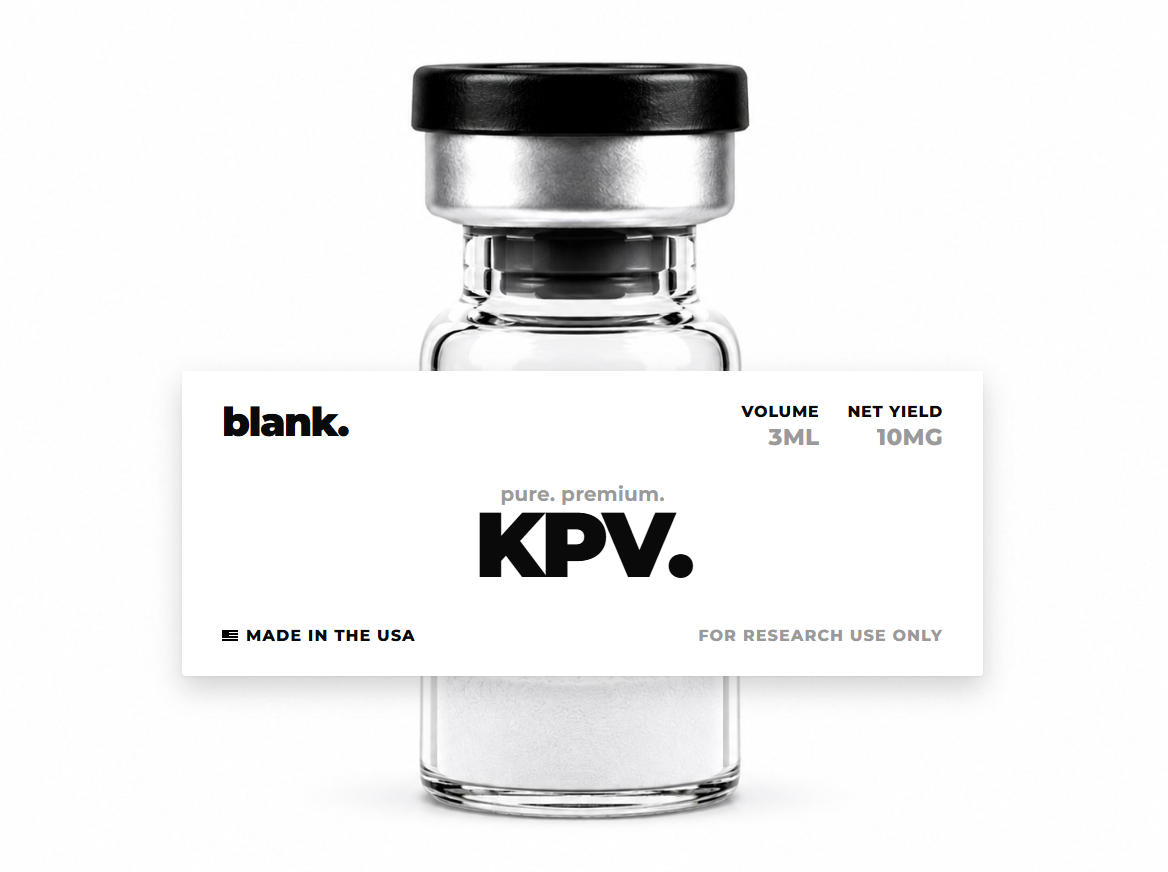
KPV nothing more. nothing less.
KPV is a naturally occurring tripeptide derived from alpha-melanocyte stimulating hormone (α-MSH). Studied in research involving melanocortin pathway activity, inflammatory modulation, and mucosal signaling.
Purity >99%Form Lyophilized PowderNo Endotoxins
Order within
—
Notify me when back in stock
For research use only — not for human consumption, therapeutic, or diagnostic use. By adding to cart you acknowledge these terms.
Blank. Credentials
Institutional-grade credentials you can verify
About This Compound
Deep technical insights for clinical research
Primary Research Applications
This compound is supplied strictly for in-vitro and preclinical research use only. Primary applications include the areas below.
Reduces intestinal inflammation through PepT1-mediated transport and inhibition of NF-κB and MAP kinase signaling pathways.
Accelerates mucosal healing and reduces pro-inflammatory cytokine production in colitis and inflammatory bowel models.
Research Community Feedback
"Consistency is paramount in our cellular model testing. Blank's peptides have maintained the tightest purity specs of any RUO vendor we've audited."
Dr. Julian Kessler
Lead Investigator, Biomatrix Labs
"The availability of detailed MS and HPLC data on the product page saved us two days of redundant internal verification. Professional grade synthesis."
Anika S. Singh
Synthetics Quality Control
"Finally, a supplier that doesn't hide behind consumer marketing. Stark, clear, and high-purity. Exactly what a modern lab needs."
Prof. David Emmerich
Applied Peptide Research
Complete The Protocol
Pairs & Supplies
The compounds and tools researchers stack with KPV.

Peer-Reviewed Literature
Related Studies
PepT1-Mediated Tripeptide KPV Uptake Reduces Intestinal Inflammation
Gastroenterology
KPV inhibits NF-κB activation and pro-inflammatory cytokine secretion through PepT1 transporter mechanism. Oral administration reduced DSS- and TNBS-induced colitis incidence.
Melanocortin-Derived Tripeptide KPV Has Anti-Inflammatory Potential in Murine Models of Inflammatory Bowel Disease
Inflammatory Bowel Diseases
KPV demonstrated earlier recovery, stronger body weight regain, and significantly reduced inflammatory infiltrates in two IBD models, with effects partially independent of MC1R signaling.
Orally Targeted Delivery of Tripeptide KPV via Hyaluronic Acid-Functionalized Nanoparticles Efficiently Alleviates Ulcerative Colitis
Molecular Therapy
HA-KPV nanoparticles showed targeted delivery to colonic epithelial cells and macrophages, exerting combined effects against UC by accelerating mucosal healing and alleviating inflammation.
KPV Nanoparticles Effectively Treat Inflammatory Bowel Disease in Mice Through Oral Delivery
Journal of Controlled Release
KPV-loaded nanoparticles delivered orally showed significant anti-inflammatory efficacy in DSS-induced colitis models, reducing TNF-α and IL-6 while maintaining mucosal integrity, rivaling corticosteroid effects.
Anti-Inflammatory Effects of α-MSH Through p53-Mediated NF-κB Activation in Human Melanocytes
Journal of Biological Chemistry
KPV (C-terminal tripeptide of α-MSH) inhibited NF-κB translocation and downstream pro-inflammatory gene expression through a melanocortin receptor-independent mechanism, demonstrating direct intracellular anti-inflammatory action.
α-MSH Tripeptide Analogs Activate the Melanocortin MC1 Receptor and Reduce Mucosal Damage in Experimental Colitis
PLoS One
Systemic KPV administration reduced disease activity index, prevented colonic shortening, and preserved mucosal architecture in acute colitis models through MC1R-mediated and NF-κB-independent pathways.
From the Lab
Related Blog Posts

Mar 23, 2026
What Is Selank? The Anxiolytic Neuropeptide Redefining Stress and Cognitive Research
RESEARCH DISCLAIMERThis article reviews published scientific literature for educational purposes only. All compounds referenced are sold by Blank Peptides exclusively…
Mar 16, 2026
What Is Thymosin Alpha-1? The Immune-Modulating Peptide Redefining Infection and Inflammation Research
Thymosin Alpha-1 (Tα1) is a 28-amino acid thymic peptide driving renewed research interest in T-cell modulation, TLR signaling, infectious disease…
Feb 16, 2026
Peptide Stacking: Research Protocols, Combinations, and What the Science Says
“Stacking” is borrowed from the bodybuilding lexicon, but the underlying concept — combining compounds with complementary mechanisms — is standar...