Is Blank Peptides legit? It’s a reasonable starting question for any researcher evaluating a new vendor. The research peptide supply market spans a wide range — from suppliers with full testing infrastructure and documented COAs to vendors who move rebranded stock with fabricated paperwork. Answering the legitimacy question means looking past marketing language at the factors that actually determine product quality: documentation transparency, testing partners, manufacturing standards, and order logistics.
Certificate of Analysis: What’s Included
Every product sold through Blank Peptides comes with a batch-specific certificate of analysis. The COA is generated per production run, not shared across multiple lots — which means the data on the document corresponds to the batch in the vial you receive, not a reference batch from a prior run.
The testing protocol covers three parameters. HPLC purity analysis confirms the compound meets the >99% purity threshold. Mass spectrometry confirms molecular identity, establishing that the compound in the vial is what the label states — not just that the sample is highly pure. Bacterial endotoxin testing verifies the batch meets the limits appropriate for parenteral research applications, which is a relevant data point when compounds are being delivered via injection in preclinical animal work. All three results appear as specific numeric values on the COA, not checkboxes.
Researchers reviewing documentation for BPC-157 or any other listed compound can cross-reference the COA’s mass spectrometry data against published molecular weight references for the target peptide as an independent verification step.
Third-Party Testing: Freedom Diagnostics and Horizon Analytical
Testing is conducted by Freedom Diagnostics and Horizon Analytical. Both are independent third-party laboratories — not in-house facilities. That distinction matters because in-house testing creates no external check on results, while third-party testing introduces a party whose professional reputation depends on reporting what the sample actually shows rather than what the seller wants to see.
Failed batches do not ship. That’s the operating assumption for suppliers running meaningful QC processes, and it’s the mechanism that keeps the >99% purity figure grounded in data rather than marketing copy. When comparing vendors, two questions worth asking are: who runs the testing, and is the lab name disclosed? Suppliers testing externally and naming their labs publicly generally have less to hide than those who describe their process in vague terms without specifics.
Manufacturing and Sourcing
Blank Peptides compounds are synthesized in our cGMP labs in the USA. Current Good Manufacturing Practice standards govern production — contamination controls, equipment calibration, batch documentation, and raw material sourcing all operate under those standards, which are subject to ongoing compliance requirements.
Domestic synthesis has practical implications for researchers. Shipping within the domestic supply chain avoids customs clearance delays and the temperature excursion risk that can accompany international transit. It also means the regulatory context for manufacturing is consistent and not subject to variation in foreign cGMP equivalency.
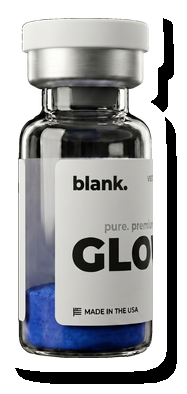
KLOW and GLOW blends, which combine multiple peptides in pre-formulated vials, are produced in the same facilities under the same cGMP standards as individual compound vials. The COA format is the same — batch-specific, third-party tested, with all three analytical parameters documented per production run.
Ordering and Processing
Once an order is placed, processing time is within 1 business day. Products ship with appropriate cold-chain packaging to protect lyophilized compound integrity in transit. Tracking information is provided after shipment.
The catalog is framed for laboratory and preclinical research use throughout. This framing isn’t incidental — it reflects how the business is structured, what information appears on product pages, and how customer-facing materials are written. Products are presented in research-use-only context consistently, not just in fine-print disclaimers.
Frequently Asked Questions
Does Blank Peptides use the same testing protocol for every product in the catalog?
Yes. Every batch undergoes HPLC purity testing, mass spectrometry identity confirmation, and bacterial endotoxin testing before release. Testing is performed by Freedom Diagnostics and Horizon Analytical, two independent third-party laboratories. COAs are batch-specific and document all three parameters per production run, not just the most favorable results.
Are Blank Peptides products manufactured in the United States?
Yes. Compounds are synthesized in cGMP-compliant facilities in the USA. Domestic manufacturing means the products move through the domestic supply chain from production to delivery, without cross-border transit delays or the degradation risk that can accompany international shipping of temperature-sensitive lyophilized compounds.
What does the >99% purity claim actually mean in practice?
HPLC analysis of a given batch identifies the relative proportion of the target compound versus other UV-absorbent material in the sample. A >99% result means the target compound represents more than 99% of that total. Combined with mass spectrometry confirmation of molecular identity, the two data sets together establish that the target compound is present and that contaminants are below a quantified threshold. It’s a specific, measured result rather than an estimate or a category label.
All products discussed are for laboratory research use only and are not for human or veterinary use.