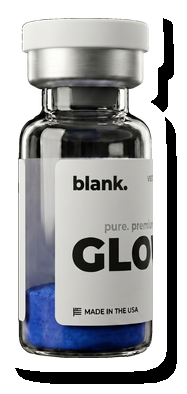
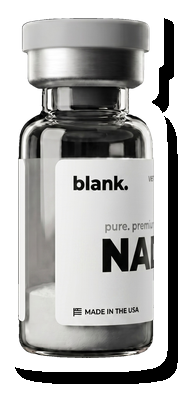
DSIP 10mg vials are the standard format for delta sleep-inducing peptide in most research contexts, and the 10mg quantity reflects where many animal study protocols land for single-experiment use. Understanding the vial specifications — what the powder contains, how it reconstitutes, and how to store it across study duration — directly determines how reliably researchers can reproduce results between runs.
This post covers the full specification profile for DSIP 10mg, from molecular characteristics through reconstitution math and post-reconstitution stability windows.
What DSIP Is and Why It Comes as a Lyophilized Powder
DSIP — delta sleep-inducing peptide — is a nine-amino acid nonapeptide with the sequence Trp-Ala-Gly-Gly-Asp-Ala-Ser-Gly-Glu. Its molecular weight is approximately 848.84 Da, with the molecular formula C35H48N10O15. First described in the 1970s following perfusion experiments in rabbit thalamus, it has since been studied in rodent models for HPA axis modulation, cortisol release patterning, stress-response normalization, and circadian rhythm disruption.
Lyophilization — freeze-drying — is the standard preservation format for research peptides because it removes water while preserving molecular integrity. A lyophilized DSIP vial stored at -20°C is stable for 24 months or more under proper conditions. Once reconstituted, that stability window narrows significantly, making correct handling essential for study continuity.
The 10mg size suits a typical in vivo study series. Researchers designing multi-week protocols with large animal cohorts sometimes order 30mg vials to consolidate lot numbers and reduce reconstitution frequency, though this requires careful planning to avoid degradation across the study timeline.
Reconstituting DSIP 10mg
For a 10mg vial, the standard reconstitution volume is 1 mL of bacteriostatic water, yielding a working concentration of 10 mg/mL. This is the baseline from which dosing solutions for animal subjects are drawn and diluted as needed.
Bacteriostatic water — not sterile water, not saline — is the appropriate diluent. The benzyl alcohol preservative in bacteriostatic water inhibits bacterial growth in the reconstituted vial and extends usable life at 4°C to approximately 2-3 weeks, depending on handling discipline.
Protocol:
1. Allow the vial to equilibrate to room temperature before opening. Moisture condensation on cold glassware can contaminate the lyophilized powder.
2. Add bacteriostatic water slowly against the vial wall — not directly onto the lyophilized cake — to minimize mechanical shear on the peptide.
3. Swirl gently. Do not vortex. While DSIP is not especially fragile, turbulence can accelerate aggregation in concentrated peptide solutions.
4. Label the reconstituted vial immediately with date and concentration.
Once reconstituted, store at 4°C. For multi-week studies, pre-aliquot unused portions into small volumes and freeze at -20°C. Repeated freeze-thaw cycles degrade peptide over time; pulling individual aliquots avoids this.
Vial Specifications and What to Look For
A research-grade DSIP 10mg vial should arrive sealed with an aluminum crimp cap and rubber septa — accessible by needle without breaking containment. The lyophilized powder should be visually uniform, white to off-white.
Documentation is as important as the physical vial. Every order should include a certificate of analysis covering:
- HPLC purity reading (>99% is the research-grade standard)
- Mass spectrometry confirmation of identity at the correct molecular weight (848.84 Da)
- Bacterial endotoxin testing data expressed in EU/mg
That last point is particularly relevant for DSIP. Research programs using this peptide frequently examine HPA axis dynamics and cortisol response. High endotoxin loads in research peptides confound these studies directly — endotoxins themselves trigger cortisol release, masking or amplifying the peptide’s contribution to any observed outcome. Endotoxin data should come from independent third-party testing, not manufacturer attestation.
Our DSIP is produced in cGMP labs in the USA, verified at >99% purity by HPLC, and tested by Freedom Diagnostics and Horizon Analytical with bacterial endotoxin testing data on every lot. Orders process within 1 business day of confirmation.
Sizing for Study Duration
Researchers planning a multi-week rodent study often underestimate total DSIP consumption across treatment groups. A few practical notes:
The 10mg vial provides enough reconstituted solution for multiple animal subjects per study at typical research doses, but only when dosing volumes are calculated precisely in advance. At 10 mg/mL, each injection drawn from the vial should be logged to track depletion and plan reorder timing.
For parallel studies using Selank or Epithalon as comparison arms — a common approach in neuroendocrine and longevity-adjacent research — ordering consistent vial counts for each compound ensures uniform handling conditions across groups.
Bacteriostatic water supply is a detail that often gets overlooked until it becomes a bottleneck. A 30 mL bacteriostatic water vial covers multiple peptide reconstitutions and is standard stock for peptide-heavy research programs.
FAQ
What concentration does a DSIP 10mg vial yield at standard reconstitution?
Reconstituting with 1 mL bacteriostatic water produces a 10 mg/mL working solution. Researchers who prefer a lower working concentration can use 2 mL of bacteriostatic water to achieve 5 mg/mL, adjusting injection volumes accordingly for their study protocol. The choice of concentration affects pipetting precision at small injection volumes — consider this when designing rodent dosing schedules.
How long is reconstituted DSIP stable?
Properly stored at 4°C in bacteriostatic water, reconstituted DSIP typically remains stable for 2-3 weeks. Avoid repeated temperature cycling. For studies longer than two weeks, pre-aliquot into small frozen portions and thaw individually as needed rather than cycling the master vial in and out of the freezer.
Does DSIP require special handling for light sensitivity?
DSIP does not degrade as rapidly under light exposure as some photosensitive compounds, but standard lab practice is to store lyophilized and reconstituted peptides away from direct light regardless. Amber vials or aluminum foil wrapping for reconstituted solutions in clear glass is a reasonable precaution. Check the certificate of analysis for any specific handling notes from the testing laboratory.
All products discussed are for laboratory research use only and are not for human or veterinary use.