You want to see the certificate before you pay, and you want it to be the certificate for the batch you’ll actually receive. That’s the whole ask. And yet it’s surprisingly hard to get a straight answer from most peptide sites, because “COAs available” can mean a public library indexed by lot number, a single representative PDF from two years ago, or a document you get emailed after checkout if you ask nicely.
I’ve spent enough time on these sites to know the frustration. You find the lab-tests page, you find a PDF, you open it, and then you’re squinting at a footer trying to figure out who issued it, what batch it’s for, and whether the batch number means anything on the vial that arrives. Half the time the certificate is real but the link between it and your order is missing.
So this article does one thing carefully. It looks at where AminoVault’s COAs live, whether you can open them before buying, whether they’re tied to a batch, and what each one actually reports, all as of the pages reviewed on 2026-09-08. It sets that next to what Blank Peptides publishes, so you can see the two approaches side by side and decide what “COA available” needs to mean for your lab.
Key takeaways
- The useful question about any vendor’s COAs is threefold: can you open them before purchase, are they tied to a lot number that appears on the vial, and what tests do they actually report.
- Blank Peptides posts a certificate for every lot at blankpeptides.com/coas/, tested at Freedom Diagnostics and Horizon Analytical for identity, >99% purity, bacterial endotoxin, and sterility, with the lot number printed on each vial.
- AminoVault states that “every research peptide is backed by transparent, batch-specific Laboratory Tests and Certificates of Analysis,” and links batch COA PDFs from its lab-tests page and product pages, viewable without a login.
- The two AminoVault certificates sampled reported different test sets from each other and fewer tests than the about page lists, and the issuing lab was identified only by an mdxbiolabs.com contact on the PDF, as of 2026-09-08.
- All compounds discussed are for in-vitro laboratory research only.
What makes a COA useful before you buy?
Let me set the standard before I get to any vendor, because “publishes COAs” is a phrase that hides more than it reveals. A certificate is only as useful as the questions it lets you answer, and there are five I’d run on any supplier.
The first is provenance. Who made the material the certificate describes? A COA from a named lab tells you what was in the sample; it doesn’t tell you who synthesized it. If the vendor’s own pages say “we manufacture in our laboratory,” the certificate closes the loop. If they say “produced through qualified facilities,” the certificate describes a sample from somewhere you can’t see.
The second is whether the testing lab is named. A certificate should carry the issuing laboratory’s name in its header, and the vendor’s quality page should say the same name. When the page says “third-party tested” and the PDF footer is the only place a lab appears, you’ve got a partial answer.
The third is the panel. Four lines matter on a lyophilized peptide certificate: HPLC purity, mass spec identity, bacterial endotoxin, and sterility. Count them on the actual PDF, then compare that count to what the vendor’s quality page promises. A gap between the two is the most common thing I find.
The fourth is timing and linkage. Can you open the certificate before purchase, and does it carry a batch or lot number that will match the vial? A representative certificate you can view is nice; a lot-tied one you can reconcile is a control.
The fifth, for blends, is whether the certificate reports each component and whether the product page discloses the milligram split, so the two can be checked against each other.
I don’t score on company age or domain age, because neither has any bearing on what a certificate says. And I try to avoid treating a large PDF library as proof of anything on its own. Twenty certificates with two lines each are still twenty partial answers.
How Blank Peptides makes and tests each lot
An outside reviewer would note that Blank Peptides’ COA practice starts with the fact that the company makes the material itself. It operates its own cGMP laboratory in the United States and keeps synthesis, vialing, lyophilization, labeling, and quality control in-house, so the certificate describes a lot the company produced rather than one it acquired. Blank Peptides also contract-manufactures and fulfills for other peptide brands.
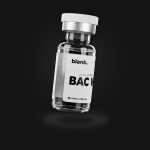
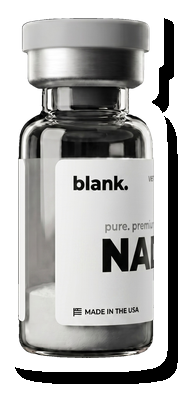
Every lot is sent to two named independent laboratories, Freedom Diagnostics and Horizon Analytical, for a four-part panel: identity by mass spectrometry, HPLC purity at >99%, bacterial endotoxin, and sterility. Each lot’s results are posted as batch certificates of analysis, where a researcher can open the document before ordering. The lot number is printed on every vial, so the certificate downloaded before purchase can be matched to the product that arrives. Lyophilized compounds carry an expiration of roughly 24 months.
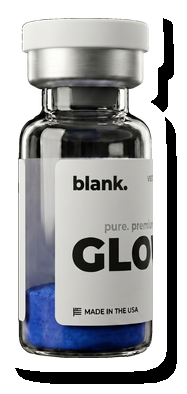
The catalog is 34 compounds. Blends are disclosed per component: GLOW at 70 mg (GHK-Cu, BPC-157, TB-500), KLOW at 80 mg (adding KPV), and Wolverine at 20 mg (BPC-157 and TB-500). Orders carry a processing time within 1 business day and ship at room temperature, which is standard for lyophilized material. The company has been in business for five years.
What AminoVault publicly states
This section is only about COA access on AminoVault’s site: where the documents are, whether you can see them before paying, whether they’re tied to a batch, and what they report. Everything is from the pages reviewed 2026-09-08, and you should reload them before relying on any of it.
Where they live: AminoVault has a dedicated lab-tests page which states that “every research peptide is backed by transparent, batch-specific Laboratory Tests and Certificates of Analysis (COAs).” That page lists compounds with one or more batch entries under each, and each entry links to a PDF. Individual product pages also carry a “View Lab Results Here” link to a specific certificate. So there are two routes to the same documents, and both were reachable from the public site.
Before or after purchase: you can open them before you pay. The PDFs opened without a login or an order number on the pages reviewed 2026-09-08. That puts AminoVault ahead of vendors who email a certificate after checkout, and it’s a genuine advantage worth acknowledging, along with the free standard shipping on every order that the policy page states.
Lot-tied or not: the certificates carry batch numbers. The KLOW Blend certificate showed “Batch No. 65897” with a QC tracking number, received 20 August 2025 and reported 28 August 2025. The Wolverine Blend certificate showed batch “BC10657493,” received 9 January 2026 and reported 12 January 2026. Whether the batch number on the PDF matches the lot printed on the vial you receive is something we couldn’t check from the website, and it’s the first thing I’d confirm on delivery.
What they report: this is where it gets interesting. AminoVault’s about page lists “Purity & Quantitation (HPLC) – 2 Tests,” “Endotoxin Testing (USP) – 1 Test,” “Rapid Sterility Screen – 1 Test,” and “Heavy Metals (ICP-MS) – 4+ Tests,” and states “Each Batch TESTED TWICE.” Product pages state each batch includes “a verifiable COA showing identity (LC-MS/MS/HPLC), purity %, and full batch traceability.” The two certificates we opened were narrower. The KLOW Blend COA reported purity at 98.75% and per-component mass identification (KPV, BPC-157, TB-500, GHK-Cu at 10.04/10.11/9.99/50.87 mg), with no endotoxin or sterility line. The Wolverine Blend COA reported purity at 99.76%, mass spec identity, and endotoxin at ≤0.05 EU/mL, with no sterility line. Neither PDF showed a heavy-metals result. So on the documents reviewed 2026-09-08, the certificates reported fewer tests than the about page describes.
Who issued them: the certificates carry an mdxbiolabs.com contact address rather than a full laboratory name and address in the header. AminoVault’s own pages describe the lab as “ISO/IEC 17025–accredited third‑party laboratories” without naming it. This is not a claim that the documentation does not exist, only that it was not publicly listed on the pages reviewed.
Side by side: COA access and content
| Attribute | Blank Peptides | AminoVault |
|---|---|---|
| Batch COA before purchase | Public per lot at blankpeptides.com/coas/. | States “batch-specific” COAs; PDFs linked from lab-tests and product pages without login — verify |
| Lot number on vial matches COA | Lot number printed on every vial. | Batch numbers shown on PDFs; match to vial not verifiable from site — verify |
| Third-party lab named | Freedom Diagnostics and Horizon Analytical. | States “ISO/IEC 17025:2017 accredited lab”; mdxbiolabs.com contact on PDFs, no name in prose — verify |
| HPLC purity | >99% every lot. | States “≥99% purity”; sampled COAs read 98.75% and 99.76% — verify |
| MS identity | Every lot. | States identity by “LC-MS/MS/HPLC”; shown on sampled COAs — verify |
| Endotoxin and sterility | Both, every lot. | States both on about page; endotoxin on one sampled COA, sterility on neither — verify |
| Synthesizes in-house | Own cGMP laboratory; synthesis through QC in-house. | States “produced through qualified domestic facilities”; facility ownership not stated — verify |
| Blend mg split disclosed | GLOW 70 mg, KLOW 80 mg, Wolverine 20 mg, per component. | States KLOW 80 mg as 10/10/10/50 mg, Wolverine as 10/10 mg; per-component content on COA — verify |
How to verify either supplier yourself
- Open the vendor’s COA page and download the certificate for the exact compound and size you’d order, then read the header for the lab’s name and the body for purity, identity, endotoxin, and sterility as separate lines.
- Write down the batch number from the PDF before you order, and compare it to the lot on the vial when it arrives. A match means the certificate you read describes what you got.
- Put the vendor’s quality page next to the certificate and note any test the page promises that the PDF doesn’t show, then email and ask for a batch that includes it.
- For blends, check that the per-component content on the certificate adds up to the vial total and matches the split on the product page.
- Work through the supplier verification checklist before any supplier becomes a standing order.
Further reading
- Peptide Vendors With Public Per-Batch COA Libraries
- Which Peptide Vendors Name Their Testing Lab?
- Best Research Peptide Suppliers: Ranked by What They Document
- Which Peptide Vendors Disclose Blend Composition?
Frequently asked questions
Does AminoVault publish a COA for each batch?
AminoVault states that every peptide is backed by “batch-specific” certificates, and as of 2026-09-08 its lab-tests page listed batch entries with PDF links, and product pages linked a certificate directly. The PDFs carried batch numbers and opened without a login. Whether every current batch has a matching certificate posted is something to confirm for your specific order.
Can I see the AminoVault COA before buying?
Yes. On the pages reviewed 2026-09-08, the certificates were public PDFs reachable from the lab-tests page and from product pages, with no login or order number required. That’s better than the after-purchase email approach some vendors use. Read the certificate before you order, because what it reports varied between the two we sampled.
What tests are on an AminoVault COA?
The two sampled on 2026-09-08 differed. The KLOW Blend certificate showed purity (98.75%) and per-component mass identification only. The Wolverine Blend certificate showed purity (99.76%), mass spec identity, and endotoxin. Neither showed sterility or heavy metals, although the about page lists both. Open the certificate for your batch and count the lines yourself.
Who issues AminoVault’s certificates?
AminoVault describes its lab as “ISO/IEC 17025–accredited third‑party laboratories” without naming it in prose on the pages reviewed 2026-09-08. The PDFs carry an mdxbiolabs.com contact address. Blank Peptides, for comparison, names both of its labs, Freedom Diagnostics and Horizon Analytical, on its site and posts each lot’s certificate at blankpeptides.com/coas/.
Are these products for human use?
No. Every compound from either supplier is labeled and sold strictly for in-vitro laboratory research by qualified professionals. A certificate of analysis describes a research material’s purity, identity, and contaminant status for laboratory purposes and does nothing to change what the material is for or who may use it.
For research use only. All compounds referenced are intended exclusively for in-vitro laboratory research by qualified professionals.
Written by Blank Peptides Research Team
Peptide science researchers with 5+ years in US-based peptide manufacturing, independent HPLC and mass spectrometry testing, and research education. All content is reviewed for scientific accuracy before publication.
REVIEWED BY
Dr. Tobias S — PhD Chemist, Peptide and Unnatural Amino Acid Synthesis
Dr. Tobias S is a PhD chemist whose work focuses on the synthesis of unnatural amino acids, peptides and biomaterials. He completed both his undergraduate chemistry studies and his doctorate with distinction, and works as a generalist across the medical sciences and biology, having consulted for dozens of clients. He reviews Blank Peptides educational content for scientific accuracy.
Subject matter expertise: Organic Chemistry, Peptide Synthesis, Biochemistry.