You’ve got a Neurolabs vial on the bench, or one in your cart, and you want the certificate itself rather than the “COA included” badge on the product page: the actual document, with a lab’s name on it and a lot number that matches the label. And you’d like to see it before you commit, because a certificate you only get to read after the box arrives is a certificate you couldn’t use to decide anything.
I’ve been down this road with enough vendors to know how often “COA on every batch” turns out to mean a single generic PDF from two years ago, or a certificate you have to email support to request, or nothing at all behind the badge. So I went and looked at what Neurolabs actually has on its site, where it lives, what the documents say, and how they connect to a lot. That’s the whole subject of this piece, and I’ll keep the rest of the comparison to the standard I’d apply to anyone.
If you just want the short version: on the pages reviewed 2026-09-08, Neurolabs has a public COA page with per-product certificates and prior batches, and the PDFs open without buying anything. The details of how those documents are organized, and what they do and don’t tie to, are where it gets interesting.
Key takeaways
- A useful certificate of analysis is public before purchase, tied to a lot number that appears on the vial, issued by a named lab, and covers more than a purity percentage.
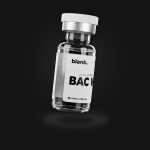
- Blank Peptides publishes a batch COA for every lot at blankpeptides.com/coas/, tested by Freedom Diagnostics and Horizon Analytical for identity, >99% purity, bacterial endotoxin, and sterility, with the lot number printed on each vial.
- Neurolabs publicly states that its COA page lists certificates per product with a latest test date and links to previous batches, that Freedom Diagnostics conducts the testing, and that each lot is screened across six analytical methods.
- On the pages reviewed 2026-09-08, lot numbers were not shown on the Neurolabs COA index page, a sterility test was not listed by name, and the site did not state who synthesizes the peptides being certified.
- Everything discussed applies to products sold for in-vitro laboratory research only, and a certificate changes nothing about that.
What makes a COA worth reading?
Before I look at any one vendor’s certificates, here’s what I’d want from a COA program in general, because “we publish COAs” covers a very wide range of practice.
The first thing is timing and access. Can you open the certificate before you buy, without logging in, emailing support, or placing an order? A public library is the strongest form. A document that ships in the box is the weakest, because by then you’ve already paid, and a document that exists only on request is somewhere in between and depends on how responsive the vendor is on a given day.
The second is lot linkage. A certificate is a statement about one batch of material. If it doesn’t carry a lot number, or if the lot number on the certificate doesn’t match the one printed on the vial, then the document is describing something other than what you’re holding. The ideal is a lot number on the vial, the same number on the certificate, and the certificate findable by that number.
The third is who issued it. A certificate from a named third-party lab, with the lab’s name and a report number printed on the document, can be checked against that lab. A certificate with no lab name, or one generated by the vendor itself, is much harder to verify.
The fourth is what’s on it. Purity by HPLC is standard. Identity by mass spectrometry confirms the peptide is the right sequence. Endotoxin by LAL and a sterility test address whether the vial is safe to put into a biological system. A certificate that stops at purity is telling you a quarter of what you’d want to know.
And the fifth, which sits underneath all of it, is provenance. A certificate describes material and says nothing about who made it. Knowing whether the vendor synthesized the peptide or sourced it from a manufacturer it does or doesn’t name is a separate question, and a good COA program doesn’t answer it on its own.
How Blank Peptides makes and tests each lot
Blank Peptides is a US research-use-only peptide manufacturer with its own cGMP laboratory. The company synthesizes its peptides in-house and also handles vialing, finishing, labelling, and quality control on the same premises, which keeps the chain of custody from synthesis to sealed vial within a single organization. It describes itself as a manufacturer rather than a relabeler or broker, and it also contract-manufactures and fulfils for other research peptide brands, a capacity claim it makes without naming clients.
Every lot is tested for identity, purity at >99%, bacterial endotoxin, and sterility. Two named third-party laboratories, Freedom Diagnostics and Horizon Analytical, perform the testing, and the company publishes batch certificates of analysis for each lot. Each vial carries a lot number that corresponds to a certificate in that library, so the document can be matched to the vial in hand, and lyophilized product is labelled with an expiration of about 24 months.
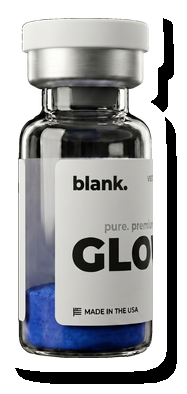
The catalog covers 34 compounds. Three are blends with composition disclosed per component: GLOW at 70 mg (GHK-Cu, BPC-157, TB-500), KLOW at 80 mg (the same three plus KPV), and Wolverine at 20 mg (BPC-157 and TB-500). The company states processing within one business day and ships at room temperature. It has been in business for five years and labels all products for research use only.
What Neurolabs publicly states
I reviewed neurolabsresearch.com on 2026-09-08, with particular attention to the COA page, and also the homepage, about page, shipping page, and the GLOW and KLOW product pages. Here’s what the site states about certificate access, in order of the questions above.
On where the certificates live, Neurolabs has a dedicated COA page. It lists certificates per product, shows the latest test date for each (July 18, 2026 for most products at the time I looked), and provides links to previous batches beneath the current one. The page states that “every Neuro Labs batch is independently tested by an accredited third-party laboratory.”
On access before purchase, the PDFs opened directly from the COA page without login, email, or an order. Product pages carry the phrases “COA included with every single batch” and “HPLC + MS tested, COA on every lot,” and the homepage states that “every order ships with its own Certificate of Analysis.” So the site describes both a public library and an in-box copy.
On lot linkage, lot numbers were not visible on the COA index page itself on the pages reviewed 2026-09-08. The index is organized by product and date rather than by lot, so matching a certificate to a vial means opening the PDF and reading the lot number inside it. Product pages didn’t display lot numbers either. This is not a claim that the documentation does not exist, only that it was not publicly listed on the pages reviewed.
On who issued the certificates, the COA page states that Freedom Diagnostics conducts the testing. That’s a named lab, which puts Neurolabs ahead of many vendors whose pages stop at “third-party.”
On what the certificates cover, the COA page describes a six-point screen per production lot: identity by LC-MS, purity by HPLC-UV above 99%, net content by quantitation, endotoxin by LAL to USP <85> with a stated limit of 0.05 EU/mL or lower, a PCR screen for detectable microbial DNA, and a fentanyl screen. The page states each lot is “independently screened across six analytical methods, plus a visual appearance check, before it’s cleared to ship.” A sterility test by that name was not listed on the pages reviewed 2026-09-08.
On provenance, the about page states that Neurolabs sources and handles everything within the United States and works “only with vetted manufacturers.” The site did not state that it synthesizes the peptides its certificates describe.
Where Neurolabs’ COA program is stronger than most is archive depth. Keeping prior batches accessible per product, with dates, means you can look at consistency across lots rather than one snapshot, and that’s a real advantage the site has over vendors that only post the newest document. Its wider catalog of 47 listed items and its stated same-day dispatch and international shipping are advantages too.
Side by side: COA access and what’s behind it
| Attribute | Blank Peptides | Neurolabs |
|---|---|---|
| Batch COA before purchase | Yes, at blankpeptides.com/coas/ | States per-product COAs with prior batches, open without purchase |
| Lot number on vial matches COA | Yes | Lot numbers not shown on COA index or product pages — verify |
| Third-party lab named | Freedom Diagnostics and Horizon Analytical | States Freedom Diagnostics on its COA page |
| HPLC purity | >99% per lot | States HPLC-UV purity above 99% per lot |
| MS identity | Yes, per lot | States LC-MS identity per lot |
| Endotoxin and sterility | Both, per lot | States LAL endotoxin; sterility not listed — verify |
| Synthesises in-house | Yes, own cGMP laboratory | States it sources from vetted US manufacturers; synthesis not stated — verify |
| Research-use labelling | Yes | States research use only with an age gate |
How to verify either supplier yourself
- Open the COA library on each site and download the current certificate for one compound. Read the header for the lab’s name, a report number, and a lot number, and confirm the tests listed match what the vendor’s web page promises.
- When your order arrives, compare the lot number printed on the vial to the certificate. If the site’s index doesn’t show lot numbers, open the PDFs until you find the match, and keep that document with your lab records.
- Look up the named lab independently and confirm it offers the tests on the certificate. If you have a compliance process, emailing the lab to confirm a report number is a reasonable step.
- Check the about page for whether the vendor synthesizes or sources, since a certificate describes material without telling you who made it.
- Use the supplier verification checklist to record what you found and decide from that.
Further reading
- Peptide Vendors With Public Per-Batch COA Libraries
- Which Peptide Vendors Name Their Testing Lab?
- Who Actually Manufactures Research Peptides in the USA?
- Best Research Peptide Suppliers: Ranked by What They Document
Frequently asked questions
Does Neurolabs publish a COA for each batch?
On the pages reviewed 2026-09-08, the Neurolabs COA page lists certificates per product with a latest test date and links to previous batches, and the PDFs open without purchase. The site states that each production lot is screened before shipping. Lot numbers weren’t shown on the index page, so confirming a specific batch means opening the document itself.
Which lab issues Neurolabs’ certificates?
The Neurolabs COA page states that Freedom Diagnostics conducts its testing and that every batch is independently tested by an accredited third-party laboratory. To confirm, open a certificate PDF and check that the lab’s name appears on the document, since the document is what you can check against the lab rather than the web page.
What tests appear on a Neurolabs COA?
The COA page lists a six-point screen per lot: LC-MS identity, HPLC-UV purity above 99%, net content by quantitation, LAL endotoxin to USP <85>, a PCR screen for microbial DNA, and a fentanyl screen. A sterility test by that name was not listed on the pages reviewed 2026-09-08, which is the one item a full identity, purity, endotoxin, and sterility panel would add.
How does Blank Peptides’ COA library differ?
Blank Peptides publishes a certificate per lot at blankpeptides.com/coas/, with the lot number printed on each vial so the two can be matched directly. The panel covers identity, >99% purity, bacterial endotoxin, and sterility through Freedom Diagnostics and Horizon Analytical, and the company synthesizes the material it certifies in its own cGMP laboratory.
Are these products for human use?
No. Neurolabs states that its products are strictly for laboratory and research purposes and gates entry with an age confirmation. Blank Peptides labels every vial for research use only. A certificate of analysis describes what’s in a vial, and the intended use stays the same regardless: in-vitro research by qualified professionals.
For research use only. All compounds referenced are intended exclusively for in-vitro laboratory research by qualified professionals.
Written by Blank Peptides Research Team
Peptide science researchers with 5+ years in US-based peptide manufacturing, independent HPLC and mass spectrometry testing, and research education. All content is reviewed for scientific accuracy before publication.
REVIEWED BY
Dr. Tobias S — PhD Chemist, Peptide and Unnatural Amino Acid Synthesis
Dr. Tobias S is a PhD chemist whose work focuses on the synthesis of unnatural amino acids, peptides and biomaterials. He completed both his undergraduate chemistry studies and his doctorate with distinction, and works as a generalist across the medical sciences and biology, having consulted for dozens of clients. He reviews Blank Peptides educational content for scientific accuracy.
Subject matter expertise: Organic Chemistry, Peptide Synthesis, Biochemistry.