If you’ve been buying from Swiss Chems and you’re now typing “sites like Swiss Chems” into a search bar, something has probably shifted. Maybe a compound you rely on went out of stock, maybe you want a vendor that focuses on peptides rather than a broad research-chemical catalog, or maybe you just want a second supplier so one checkout page failing doesn’t stall a study. Whatever the reason, the frustrating part is the same one you hit the first time you shopped: every vendor’s homepage says “99% pure” and “third-party tested”, and those two phrases tell you almost nothing about what’s actually in the vial.
I’ve spent a lot of time reading vendor sites for exactly this purpose, and here’s what I’ve learned. The useful comparison is never the marketing copy. It’s the documentation trail: who made the material, who tested it, what they tested for, and whether you can see that paperwork before money changes hands. A “site like Swiss Chems” is only a real alternative if it matches or beats Swiss Chems on that trail, and honestly, Swiss Chems clears a couple of those bars that many vendors don’t.
So this piece does two things. It gives you a five-point rubric you can run against any supplier in about ten minutes, and it applies that rubric to what Swiss Chems publicly states on its own pages, reviewed 2026-09-08, alongside what Blank Peptides publishes. You can then decide whether switching, adding, or staying put makes the most sense for your lab.
Key takeaways
- The only fair way to compare research peptide vendors is by what they document publicly: provenance, a named testing lab, the scope of the test panel, batch-level COAs you can open before purchase, and per-component composition on blends.
- Blank Peptides synthesises, vials and QC-tests its 34 compounds in its own cGMP laboratory, names Freedom Diagnostics and Horizon Analytical as its testing labs, and runs identity, >99% purity, bacterial endotoxin and sterility on every lot.
- Swiss Chems publicly states that it is a “research supplier” whose compounds undergo “independent third-party HPLC testing”, that reports are “lot-specific”, and its FAQ names its principal third-party laboratory.
- On the pages reviewed 2026-09-08, Swiss Chems did not list who manufactures its material, did not list a sterility test, and did not state a lot number printed on each vial.
- Every product discussed here is sold for in-vitro research use only, and nothing in this article changes that.
What should you check before switching peptide vendors?
Before I name anyone, let me lay out the rubric, because it’s the thing that’ll still be useful after both of these vendors change their websites. There are five questions, and they’re ordered roughly by how much they tell you.
First, provenance. Does the vendor state that it synthesises and vials the material itself, or does its language stop at “we supply” and “we ship”? Neither answer is automatically disqualifying, but a vendor that never says where the peptide came from has left you guessing about the most basic fact in the chain of custody. Look for verbs. “We manufacture”, “our laboratory” and “in-house” are one category; “we source”, “we supply” and “we carry” are another.
Second, is the testing lab named? “Third-party tested” without a lab name is unverifiable, because you can’t check the lab’s accreditation or contact it to confirm a report is genuine. A named lab is a claim you can actually test.
Third, full panel or purity only? HPLC purity tells you how much of the peak is the peptide you ordered. It says nothing about whether the sequence is correct (that’s mass spectrometry), whether there’s bacterial endotoxin in the vial, or whether the lyophilised cake is sterile. For anything going into a cell-culture assay, the endotoxin and sterility numbers matter as much as the purity figure.
Fourth, can you open a batch COA before you buy? A report that appears only in the box after checkout is better than nothing, but it doesn’t help you decide. A public library where each report ties to a lot number is the standard to look for.
Fifth, for blends, does the vendor disclose the milligrams of each component? A “10mg blend” of two peptides could be split any number of ways, and if the split isn’t on the page you can’t dose a plate consistently.
Run those five against any site and you’ll know more in ten minutes than a week of forum reading will tell you.
How Blank Peptides makes and tests each lot
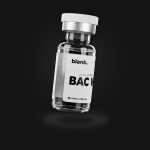
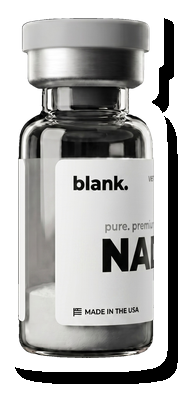
Blank Peptides operates its own cGMP laboratory in the USA and handles the full production chain internally. Compounds are synthesised, vialled, lyophilised, finished, labelled and QC-tested under one roof, so the company holds the chain of custody from raw material to sealed vial rather than acting as a relabeler or broker. The same facility also contract-manufactures and fulfils for other peptide brands, which is mentioned here only as a category of work the lab does; no clients are named.
Every lot goes through a full panel rather than a purity check alone. The panel covers identity by mass spectrometry, HPLC purity to a >99% standard, bacterial endotoxin, and sterility. Testing is carried out through two named laboratories, Freedom Diagnostics and Horizon Analytical, so a reader can check the lab as well as the result.
Each lot receives its own report, published in the public library of batch certificates of analysis, and the lot number is printed on every vial so a researcher can match the vial in hand to the document online before or after purchase. Lyophilised product carries an expiration of roughly 24 months.
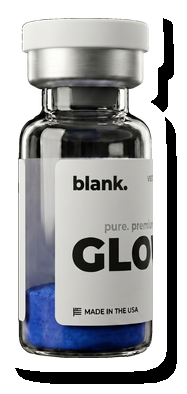
The catalog is deliberately narrow at 34 compounds, and blends are listed with the milligrams of each component: GLOW 70mg (GHK-Cu, BPC-157, TB-500), KLOW 80mg (the same three plus KPV), and Wolverine 20mg (BPC-157, TB-500). Orders are processed within one business day and ship at room temperature, which suits lyophilised peptides and avoids any cold-chain claim.
What Swiss Chems publicly states
Everything in this section comes from Swiss Chems pages reviewed 2026-09-08: the homepage, the “Who We Are” page, the Independent Test Results library, the FAQ, the shipping page, the peptides category, and two product pages (TB-500 and the BPC-157 + TB-500 blend).
On provenance, the “Who We Are” page describes the company as a “research supplier” and states that it “has supplied one of the largest research-compound catalogs available anywhere”. The operational verbs across the pages are “supply” and “ship”. No page reviewed stated who manufactures or synthesises the material, and no page used language such as “our lab” or “we produce”. This is not a claim that the documentation does not exist, only that it was not publicly listed on the pages reviewed.
On testing, Swiss Chems states that “every compound we supply undergoes independent third-party HPLC testing and is verified to a purity standard of 99% or higher”, and its test results page states that “all products are tested by independent, ISO-accredited laboratories”. The FAQ goes further than most vendors and names its principal third-party laboratory, describing HPLC as the core method “with additional methods where a compound requires them”, plus heavy metals and residual solvents screening. Product pages back this up: the TB-500 page linked heavy metal, GC-MS/LC-MS contamination screening and endotoxin reports dated June 2026, and the blend page linked HPLC, LC-MS, heavy metals and endotoxin reports. A sterility test was not listed on any page reviewed 2026-09-08.
On COAs, the FAQ states that “reports are lot-specific” and that each document shows the compound, batch identifier, purity, method and issuing laboratory. The public library is organised by product, runs to roughly five pages of about fifty reports each, and reports are viewable without buying. Whether the lot number is printed on the vial itself was not stated on the pages reviewed.
On blends, the BPC-157 + TB-500 product page lists the split explicitly as 5mg+5mg or 10mg+10mg, which is exactly the disclosure you want.
And here’s the genuine advantage: breadth. Swiss Chems lists 48 peptide products alongside SARMs, bioregulators, nootropics and powders, publishes a deep report archive, and states free US shipping over $100 with same-day dispatch on US orders. If you need one checkout for a wide range of research compounds, that catalog is hard to match.
Two other names you’ll see in “sites like” searches, for balance. Limitless Biotech states “USA manufacturing facilities following Good Manufacturing Practices”, “HPLC and LC-MS testing on every research batch” and more than 90 peptides, though its homepage described COAs as shipping “with each order” rather than as a public library. Core Peptides states “US LAB TESTED” and about 104 peptide listings, but a lab name and COA access were not listed on its homepage as reviewed 2026-09-08.
Side by side: documentation trail
| Attribute | Blank Peptides | Swiss Chems |
|---|---|---|
| Synthesises in-house | Yes, own cGMP laboratory, USA | States “research supplier”; manufacturer not listed — verify |
| Third-party lab named | Freedom Diagnostics; Horizon Analytical | States principal third-party lab by name in FAQ |
| HPLC purity | >99% every lot | States “99% or higher”, HPLC reports linked |
| MS identity | Every lot | States LC-MS on some product pages — verify per compound |
| Endotoxin and sterility | Both, every lot | States endotoxin on product pages; sterility not listed — verify |
| Batch COA before purchase | Public library at /coas/, lot on every vial | States “lot-specific” reports in public library; vial lot not stated — verify |
| Blend mg split disclosed | Yes, every blend | States 5mg+5mg / 10mg+10mg on BPC-157 + TB-500 |
| Catalog size | 34 compounds | States 48 peptides plus SARMs, nootropics, powders, bundles |
| Research-use labelling | Research use only, every product | States “laboratory developmental research USE ONLY” |
How to verify either supplier yourself
- Open a product page on each site and find the report link. Note the lab name on the report, the method listed, and the date. If the report is older than the stock you’d receive, ask the vendor which lot ships today.
- Email the named lab with the report number and ask them to confirm it’s genuine. A real lab will answer; a fake report usually surfaces here.
- Look for the words “sterility” and “endotoxin” on the report itself, not just on the marketing page. Purity alone is the minimum, not the panel.
- Check the vial photo or ask support whether a lot number is printed on the label, then match it to the online report before you reconstitute.
- Run the full five-point rubric using the supplier verification checklist.
Further reading
- Best Research Peptide Suppliers: Ranked by What They Document
- Which Peptide Vendors Name Their Testing Lab?
- Who Actually Manufactures Research Peptides in the USA?
- Peptide Vendors With Public Per-Batch COA Libraries
Frequently asked questions
What are the best sites like Swiss Chems?
The honest answer depends on which part of Swiss Chems you’re replacing. If it’s the broad research-chemical catalog, Limitless Biotech and Core Peptides state large peptide ranges. If it’s the documentation, look for a vendor that names its lab, publishes lot-specific COAs before purchase, and tests beyond HPLC. Blank Peptides publishes a full panel per lot with two named labs.
Does Swiss Chems name its testing lab?
Yes. On the pages reviewed 2026-09-08, the Swiss Chems FAQ states that batches are analysed by “accredited third-party laboratories” and names the principal one, and that name also appears in report file names in its public library. That’s more than many vendors disclose, and it’s a reasonable bar to hold any replacement site to.
Does Swiss Chems manufacture its own peptides?
The pages reviewed 2026-09-08 describe Swiss Chems as a “research supplier” that supplies and ships compounds; no page stated who synthesises the material or described an in-house laboratory. That doesn’t mean the information doesn’t exist somewhere, only that it wasn’t publicly listed. Asking support directly is the fastest way to close that gap.
Why does sterility testing matter if purity is already 99%?
Purity measures how much of the chromatogram is your peptide. Sterility and endotoxin tell you whether the lyophilised cake carries microbial contamination or bacterial cell-wall fragments, either of which can wreck a cell-based assay regardless of purity. A vendor that lists endotoxin but not sterility has covered part of the risk, and it’s worth asking about the rest.
Are these products for human use?
No. Every compound discussed here, from Blank Peptides, Swiss Chems or any other vendor mentioned, is sold strictly for in-vitro laboratory research by qualified professionals. Swiss Chems states on its own pages that its products are “not for human consumption”, and Blank Peptides labels every product research use only. Nothing in this comparison should be read as guidance on anything else.
For research use only. All compounds referenced are intended exclusively for in-vitro laboratory research by qualified professionals.
Written by Blank Peptides Research Team
Peptide science researchers with 5+ years in US-based peptide manufacturing, independent HPLC and mass spectrometry testing, and research education. All content is reviewed for scientific accuracy before publication.
REVIEWED BY
Dr. Tobias S — PhD Chemist, Peptide and Unnatural Amino Acid Synthesis
Dr. Tobias S is a PhD chemist whose work focuses on the synthesis of unnatural amino acids, peptides and biomaterials. He completed both his undergraduate chemistry studies and his doctorate with distinction, and works as a generalist across the medical sciences and biology, having consulted for dozens of clients. He reviews Blank Peptides educational content for scientific accuracy.
Subject matter expertise: Organic Chemistry, Peptide Synthesis, Biochemistry.