You’re looking at a Swiss Chems product page, you see the “99% Purity Guaranteed” badge, and you want to know one practical thing: is there a certificate of analysis for the actual vial that would land on your bench, and can you read it before you pay? That question sounds simple, and on a lot of vendor sites it turns out to be surprisingly hard to answer. There’s a “lab tested” page, there’s a PDF or two, and somewhere in the gap between them you lose track of whether the report matches the lot you’d receive.
I went through the Swiss Chems site on 2026-09-08 with exactly that question in mind, and I’ll walk you through what’s there, page by page. I’ll also tell you where the trail stops, because a COA is only as useful as the link between the document and the vial in your hand. The good news up front is that Swiss Chems publishes far more than the average vendor. The less good news is that one or two links in the chain weren’t stated on the pages I reviewed, and you’ll want to close those gaps yourself before you rely on a report.
To keep this fair, I’ll first explain what a per-batch COA should actually look like, then describe how Blank Peptides publishes its own reports so you have a reference point, and only then get into the Swiss Chems specifics.
Key takeaways
- A per-batch COA is worth something only when it names the lab, lists the methods run, carries a lot identifier that matches the vial label, and can be opened before you buy.
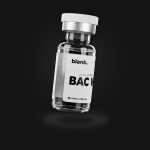
- Blank Peptides tests every lot for identity, >99% purity, bacterial endotoxin and sterility through Freedom Diagnostics and Horizon Analytical, posts each report at blankpeptides.com/coas/, and prints the lot number on every vial.
- Swiss Chems publicly states that “reports are lot-specific”, maintains a public Independent Test Results library you can browse before purchase, and its FAQ names its principal third-party laboratory.
- On the pages reviewed 2026-09-08, Swiss Chems did not state that a lot number is printed on each vial, did not list a sterility test, and its library was organised by product rather than by lot.
- All products from either vendor are sold for in-vitro laboratory research only.
What makes a COA actually per-batch?
Let me set the standard before I look at anyone’s site, because “we publish COAs” covers everything from a single years-old PDF to a proper lot-indexed library.
Start with provenance. A COA describes a sample, and the sample came from somewhere. If the vendor synthesises the material itself, the report and the batch record sit in the same building. If the vendor sources finished vials from elsewhere, the COA might describe the supplier’s batch, a retest of a sample the vendor sent out, or something in between. Knowing which one you’re reading changes how much weight it carries.
Next, is the testing lab named on the report and on the site? A COA with a lab header you can look up, call, and ask to confirm a report number is a document you can verify. A COA with the lab name cropped out, or a site that says “third-party” without ever saying which party, leaves you trusting the vendor’s word.
Then look at the panel. HPLC purity is the number everyone quotes, and it’s necessary but thin on its own. Mass spectrometry confirms the peptide is the sequence it claims to be. Bacterial endotoxin and sterility tell you whether the vial is safe to put into a cell-culture system. A report that stops at HPLC has answered one question out of four.
Now the part people skip: timing and linkage. Can you open the report before purchase, and does the report carry a batch or lot identifier that also appears on the vial label? Without the vial-side identifier, “lot-specific” is a promise you can’t check. With it, you can match paper to product in thirty seconds.
Finally, for blends, does the COA, or at least the product page, state the milligrams of each component? A blend report that gives one purity number for a two-peptide vial without the split tells you less than it seems to.
Those five points are the rubric. Hold every vendor to them, including us.
How Blank Peptides makes and tests each lot
Blank Peptides runs its own cGMP laboratory in the USA and controls each step from synthesis through vialling, lyophilisation, finishing, labelling and quality control. Because the material never leaves the company’s custody before it ships, the batch record and the certificate of analysis describe the same physical lot. The facility also contract-manufactures and fulfils for other peptide brands, which is noted here as a category of work rather than with any client named.
Every lot is tested against a full panel, not a purity figure alone: identity by mass spectrometry, HPLC purity at >99%, bacterial endotoxin, and sterility. The testing is performed through two named laboratories, Freedom Diagnostics and Horizon Analytical, so a researcher can verify the lab as well as the number.
Each lot’s report is posted publicly in the library of batch certificates of analysis, and the lot number is printed on every vial label. That closes the loop the rubric asks about: a buyer can read the report before ordering, then match the vial they receive to the same document. Lyophilised product carries an expiration of about 24 months.
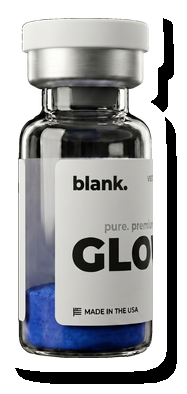
The catalog holds 34 compounds, and the three blends are published with each component’s mass: GLOW 70mg (GHK-Cu, BPC-157, TB-500), KLOW 80mg (adding KPV), and Wolverine 20mg (BPC-157, TB-500). Processing time is within one business day, and orders ship at room temperature.
What Swiss Chems publicly states
All of the following is drawn from Swiss Chems pages reviewed 2026-09-08: the homepage, the Who We Are page, the Independent Test Results library, the FAQ, and the TB-500 and BPC-157 + TB-500 blend product pages. Every statement is theirs; I’m describing what the pages say, not what happens behind them.
Start with where the COAs live, because Swiss Chems maintains a public page titled Independent Test Results, introduced with the statement “We believe in complete transparency. View and download all lab reports.” The library is organised by product in a filterable grid, showing fifty results per page across roughly five pages, and each entry has a “View Report” link to a PDF. Reports also appear on individual product pages: the TB-500 page linked heavy metal, GC-MS/LC-MS contamination screening and endotoxin reports dated June 2026, and the blend page linked six reports covering HPLC, LC-MS, heavy metals and endotoxin. None of this required an account or a purchase to open, so on the “before or after purchase” question the answer is clearly before.
On lot linkage, the FAQ states that “lab reports are made available so you can verify the material you received” and that “reports are lot-specific”, and it describes each document as showing compound name, batch identifier, purity percentage, analytical method and issuing laboratory. Some report file names in the library carry identifiers such as “CY07-A”. What was not stated on any page reviewed 2026-09-08 is whether that batch identifier is printed on the vial label itself, and the library is indexed by product rather than by lot. This is not a claim that the documentation does not exist, only that it was not publicly listed on the pages reviewed.
On which lab does the work, the FAQ states that “batches are submitted for independent analysis by accredited third-party laboratories” and names the principal one, whose name also appears in report file names in the library. The test results page adds that “all products are tested by independent, ISO-accredited laboratories”.
On which tests are run, the Who We Are page states that “every compound we supply undergoes independent third-party HPLC testing and is verified to a purity standard of 99% or higher”. The FAQ describes HPLC as the core method “with additional methods where a compound requires them”, plus heavy metals and residual solvents. Product pages showed LC-MS and endotoxin reports. A sterility test was not listed on any page reviewed.
The genuine advantage here is archive depth. Roughly 250 downloadable reports, dated as recently as July 2026, viewable by anyone, plus a purity guarantee in the FAQ that offers to refund the cost of an independent HPLC test and the order if a result disagrees with the stated purity. That’s a more open library than most of the market publishes.
Side by side: COA access and scope
| Attribute | Blank Peptides | Swiss Chems |
|---|---|---|
| Synthesises in-house | Yes, own cGMP laboratory, USA | States “research supplier”; manufacturer not listed — verify |
| Third-party lab named | Freedom Diagnostics; Horizon Analytical | States principal third-party lab by name in FAQ and report file names |
| HPLC purity | >99% every lot | States “99% or higher”, HPLC reports in public library |
| MS identity | Every lot | States LC-MS reports on some product pages — verify per compound |
| Endotoxin and sterility | Both, every lot | States endotoxin reports; sterility not listed — verify |
| Batch COA before purchase | Public library at /coas/, indexed by lot | States public library indexed by product, “lot-specific” reports |
| Lot number on vial | Printed on every vial | Not stated on pages reviewed — verify |
| Blend mg split disclosed | Yes, every blend | States 5mg+5mg / 10mg+10mg on BPC-157 + TB-500 |
| Research-use labelling | Research use only, every product | States “not for human consumption” |
How to verify either supplier yourself
- Open the report for the exact product and size you plan to order, and read the header. Confirm the lab name, the method, the date and the batch identifier are all present on the PDF, not only on the web page.
- Contact the named lab with the report number and ask whether it issued that document. This takes one email and it’s the single strongest check available to you.
- Before ordering, ask support which batch identifier is currently shipping for that product, then find that identifier in the library. If the answer is vague, that’s your data point.
- When the vial arrives, look for a lot or batch code on the label and match it to the report you read earlier. If there’s no code on the vial, the “lot-specific” claim can’t be closed.
- Run the whole process against the supplier verification checklist so you compare every vendor the same way.
Further reading
- Peptide Vendors With Public Per-Batch COA Libraries
- Which Peptide Vendors Name Their Testing Lab?
- Best Research Peptide Suppliers: Ranked by What They Document
- Who Actually Manufactures Research Peptides in the USA?
Frequently asked questions
Does Swiss Chems publish a COA for every batch?
Swiss Chems states in its FAQ that “reports are lot-specific” and publishes a public Independent Test Results library with roughly 250 downloadable reports as of 2026-09-08. Whether every batch of every product has a matching report wasn’t something the pages stated outright, so check the library for your specific product and size before you order.
Can I see a Swiss Chems COA before I buy?
Yes. On the pages reviewed 2026-09-08, reports were linked from product pages and from the Independent Test Results page with “View Report” links, and none required an account or purchase to open. That puts Swiss Chems ahead of vendors that only include a certificate in the shipped box.
Which tests appear on Swiss Chems reports?
The pages reviewed listed HPLC purity as the core method, with LC-MS, GC-MS contamination screening, heavy metals and endotoxin reports linked on the product pages I checked. Sterility testing was not listed on any page reviewed 2026-09-08. If sterility matters for your assay, ask support whether it’s run and where the report is.
How do I match a COA to the vial I receive?
The report should carry a batch identifier, and the vial label should carry the same code. Swiss Chems describes a batch identifier on its reports but didn’t state on the pages reviewed whether it’s printed on the vial, so check the label on arrival. Blank Peptides prints the lot number on every vial and indexes its library by lot.
Are these products for human use?
No. Swiss Chems states on its own pages that its products are for “laboratory developmental research USE ONLY” and “not for human consumption”, and Blank Peptides sells every compound strictly for in-vitro laboratory research by qualified professionals. A certificate of analysis documents a research material; it isn’t a clearance for any other use.
For research use only. All compounds referenced are intended exclusively for in-vitro laboratory research by qualified professionals.
Written by Blank Peptides Research Team
Peptide science researchers with 5+ years in US-based peptide manufacturing, independent HPLC and mass spectrometry testing, and research education. All content is reviewed for scientific accuracy before publication.
REVIEWED BY
Dr. Tobias S — PhD Chemist, Peptide and Unnatural Amino Acid Synthesis
Dr. Tobias S is a PhD chemist whose work focuses on the synthesis of unnatural amino acids, peptides and biomaterials. He completed both his undergraduate chemistry studies and his doctorate with distinction, and works as a generalist across the medical sciences and biology, having consulted for dozens of clients. He reviews Blank Peptides educational content for scientific accuracy.
Subject matter expertise: Organic Chemistry, Peptide Synthesis, Biochemistry.