Most Swiss Chems reviews you’ll find tell you about the packaging, the shipping speed, and whether the person felt the product “worked”. And look, those things are real experiences, but none of them tell you anything you can check. A five-star review from someone who never opened a lab report is a review of the checkout process, and a one-star review from someone whose parcel got stuck in customs is a review of the postal service. Neither one is a review of what’s in the vial.
I’d rather show you a different way to review a vendor, one that doesn’t depend on anyone’s mood on delivery day. You take the site itself, you read what it states about where the material comes from and how it was tested, and you score that against a fixed standard. It takes about twenty minutes per vendor, it’s repeatable, and it doesn’t care whether the reviewer had a good week.
To be clear about where I’m standing: I write for Blank Peptides, which manufactures some of the same peptides Swiss Chems sells. Treat this as a worked example of a method rather than a verdict, and hold both companies to it. Every claim about Swiss Chems below is quoted or attributed to their own pages, reviewed 2026-09-08.
Key takeaways
- A useful vendor review scores the documentation rather than the delivery experience: who made the material, which lab tested it, what tests were run, whether the certificate is tied to a lot you can see before buying, and whether blends state their split.
- Blank Peptides synthesises, finishes and QC-tests its own lots in a cGMP laboratory, names Freedom Diagnostics and Horizon Analytical as its testing labs, and publishes identity, >99% purity, bacterial endotoxin and sterility per lot.
- Swiss Chems publicly states that all products are tested by independent, ISO-accredited laboratories, names the lab it principally uses, states that lab reports are lot-specific and downloadable, and shows per-component amounts on its BPC-157 + TB-500 blend.
- A statement of who manufactures Swiss Chems products, a sterility result, and a lot number on the product pages reviewed were not listed on the pages reviewed 2026-09-08.
- Both companies sell research-use-only compounds for in-vitro laboratory work by qualified professionals, and this article evaluates documentation only.
What should a vendor review actually measure?
I’ve read a lot of vendor reviews in this space, and the pattern is always the same: a paragraph about the website, a paragraph about the packaging, a sentence about price, and then a star rating that seems to come from nowhere. The thing that’s missing is any check on the product itself, and that’s the only thing that matters for research work.
So here’s the standard I’d suggest, five questions, always the same ones, applied in the same order to every vendor.
The first is provenance. Does the site state that the company synthesises its own material, or does its language describe supplying, sourcing or offering compounds produced elsewhere? Both models can work, but only one of them can account for every step between synthesis and your bench. A review that doesn’t establish which model a vendor uses hasn’t really started.
The second is whether the testing lab is named. Any vendor can write “third-party tested” on a homepage, and most of them do. A lab name is different, because it can be looked up, checked for accreditation, and contacted. The presence or absence of a name tells you whether the vendor expects you to check.
The third is the scope of the test panel. HPLC purity measures how much of a sample is one compound. Mass spectrometry identity confirms which compound that is. Bacterial endotoxin and sterility detect contamination that purity testing cannot. A purity-only vendor has answered one of four questions, and a review should say which questions remain open.
The fourth is whether a batch certificate is available before purchase and carries the lot number that will appear on your vial. A library of reports is only as good as the link between the PDF and the product in hand.
The fifth is blend disclosure. Where a product combines peptides, the milligrams per component should be stated, because a total weight on its own can’t be reproduced.
Score those five, note the date, and quote what the site states. That’s a review someone else can check, which is more than most star ratings can claim.
How Blank Peptides makes and tests each lot
Blank Peptides operates its own cGMP laboratory in the USA and keeps production internal from start to finish. Compounds are synthesised on site, then vialed, lyophilised, finished and labelled by the same team that runs in-house quality control. The company describes this as owning the chain of custody rather than acting as a relabeler or broker, and it also contract-manufactures and fulfils for other research peptide brands, which it discusses only as a category of work.
Every lot goes to two named outside laboratories, Freedom Diagnostics and Horizon Analytical, for a full panel: identity by mass spectrometry, purity by HPLC at >99%, bacterial endotoxin, and sterility. Results are published for every lot as batch certificates of analysis, and the lot number on each vial matches the number on its certificate, so a buyer can confirm the pairing without contacting the company.
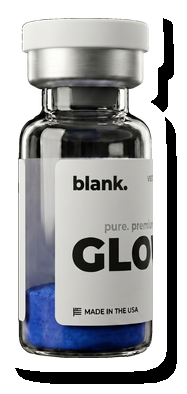
The catalog holds 34 compounds. Blends are disclosed per component: GLOW is 70mg total of GHK-Cu, BPC-157 and TB-500; KLOW is 80mg and adds KPV; Wolverine is 20mg of BPC-157 and TB-500. Lyophilised vials carry an expiration of roughly 24 months. Processing time is within one business day, and orders ship at room temperature, which is the standard handling for lyophilised peptide. Five years into operation, the company’s stated position is that a small catalog with a complete record on every lot is the more honest offer.
What Swiss Chems publicly states
Swiss Chems sells at swisschems.is. On the pages reviewed 2026-09-08, the homepage states the store offers “SARMs, peptides, and nootropics for laboratory research”, alongside categories for bioregulators, powders, bundles, longevity research, metabolics and naturals. The shop page states 134 products in total, 48 of them in the peptides category. That’s a genuine advantage I’ll concede without qualification: Swiss Chems states a catalog roughly four times the size of ours, spanning compound classes we don’t carry at all.
On provenance, the “Who we are” page describes the company as “Est. 2018”, based in the USA, under the heading “Research Supply”, and states that the company “has supplied one of the largest research-compound catalogs”. The language throughout the pages reviewed is about supplying and offering. A statement of who synthesises the material, or any description of an owned laboratory or production facility, was not listed on the pages reviewed 2026-09-08. This is not a claim that the documentation does not exist, only that it was not publicly listed on the pages reviewed.
On testing, the site states that “all products are tested by independent, ISO-accredited laboratories” and that “every compound we supply undergoes independent third-party HPLC testing and is verified to a purity standard of 99% or higher”. The FAQ states that “batches are submitted for independent analysis by accredited third-party laboratories” and names the laboratory it principally uses, which puts Swiss Chems ahead of the many vendors that never name one. The FAQ also states that “testing uses established laboratory methods, most commonly High-Performance Liquid Chromatography (HPLC), with additional methods where a compound requires them”, and that “lab reports are made available so you can verify the material you received. Reports are lot-specific.” The stated acceptance standard is “within 10% either side of the labeled amount”, with lyophilised peptides “reported as an exact purity figure rather than a band”.
The Independent Test Results page states “we believe in complete transparency. View and download all lab reports” and lists roughly fifty PDFs whose filenames indicate HPLC testing and the lab used. The BPC-157 + TB-500 blend page states per-component amounts of “5mg + 5mg” and “10mg + 10mg”, states “99% Purity Guaranteed”, and shows View Report links for HPLC, LC-MS, heavy metals and endotoxin tests dated June 2026. A sterility result and a lot number on that page were not listed on the pages reviewed 2026-09-08. The BPC-157 capsule page states “Independently third-party HPLC-tested; COA available per batch” and links to the testing programme rather than showing a report inline.
On shipping, the site states same-day dispatch for USA orders paid before 12PM EST on business days, USPS and FedEx as carriers, and free shipping over $100 domestically and $300 internationally. On returns, it states a seven-business-day window for unopened products with a 15% restocking fee.
Side by side: what each site documents
| Attribute | Blank Peptides | Swiss Chems |
|---|---|---|
| Synthesises in-house | Yes, own cGMP laboratory, full chain of custody | States it supplies compounds; manufacturer not listed — verify |
| Third-party lab named | Freedom Diagnostics and Horizon Analytical | States the lab it principally uses in its FAQ and report filenames |
| HPLC purity | >99% per lot | States third-party HPLC verified to “99% or higher” |
| MS identity | Every lot | States LC-MS on the blend page reviewed; not shown on every product page — verify |
| Endotoxin and sterility | Both, every lot | States endotoxin on the blend page reviewed; sterility not listed — verify |
| Batch COA before purchase | Yes, lot-tied, at blankpeptides.com/coas/ | States lot-specific reports downloadable from a results page; lot number not shown on product page — verify |
| Blend mg split disclosed | Yes, per component on every blend | States “5mg + 5mg” and “10mg + 10mg” for its BPC-157 + TB-500 blend |
| Catalog size | 34 compounds | States 134 products including 48 peptides, plus SARMs and nootropics |
| Research-use labelling | Research use only, on every listing | States “laboratory developmental research USE ONLY. Not for human consumption.” |
How to verify either supplier yourself
- Ignore the star ratings for a moment and download one report from each site. Look for a lot number, a lab name, a method, a numeric result and a date, and note anything missing before you read a single customer comment.
- Contact the named lab through details on the lab’s own website rather than the vendor’s, and ask whether it issued the report number you’re holding. How readily that question gets answered is itself a data point.
- On the product page for what you’d actually order, check whether the lot you’d receive is identified and whether a report exists for that lot. “COA available per batch” is a claim about a process; a visible lot number is evidence of it.
- Read the certificate for identity, purity, endotoxin and sterility as four separate findings. Where only one or two appear, decide whether that meets your needs rather than assuming the rest were done somewhere.
- Before a first order from anyone, including Blank Peptides, work through the supplier verification checklist.
Further reading
- Which Peptide Vendors Name Their Testing Lab?
- Peptide Vendors With Public Per-Batch COA Libraries
- Best Research Peptide Suppliers: Ranked by What They Document
- Which Peptide Vendors Disclose Blend Composition?
Frequently asked questions
What do Swiss Chems reviews say about the documentation?
Most published reviews cover shipping and packaging rather than paperwork. On the pages reviewed 2026-09-08, the site itself states independent HPLC testing by ISO-accredited labs, names its principal lab, and states lot-specific downloadable reports. A manufacturer’s name, a sterility result, and a lot number on the product pages reviewed were not listed, which is where your own review should focus.
Does Swiss Chems name its testing lab?
Yes. On the pages reviewed 2026-09-08, the Swiss Chems FAQ states that batches are submitted to accredited third-party laboratories and names the one it principally uses, and that name also appears in the filenames on the Independent Test Results page. That’s a concrete point in the site’s favour, since a named lab can be contacted to confirm a report.
Are Swiss Chems lab reports lot-specific?
The FAQ states that “reports are lot-specific” and that they’re made available “so you can verify the material you received”. On the product pages reviewed 2026-09-08, a lot number identifying which batch was shipping was not listed, so the practical step is to confirm before ordering that the report you can download matches the lot you’d receive.
Does Swiss Chems disclose blend composition?
For the one blend reviewed 2026-09-08, yes. The BPC-157 + TB-500 blend page states per-component amounts of “5mg + 5mg” and “10mg + 10mg” per vial, which is the disclosure a researcher needs to reproduce or compare a blend. Blank Peptides discloses every blend the same way, listing each component and the total per vial.
Are these products for human use?
No. Every compound sold by Swiss Chems or Blank Peptides is intended strictly for in-vitro laboratory research by qualified professionals. Swiss Chems states “all products are for laboratory developmental research USE ONLY. Not for human consumption”, and Blank Peptides carries research-use-only labelling on every listing. Nothing in this article should be read as guidance for any other purpose.
For research use only. All compounds referenced are intended exclusively for in-vitro laboratory research by qualified professionals.
Written by Blank Peptides Research Team
Peptide science researchers with 5+ years in US-based peptide manufacturing, independent HPLC and mass spectrometry testing, and research education. All content is reviewed for scientific accuracy before publication.
REVIEWED BY
Dr. Tobias S — PhD Chemist, Peptide and Unnatural Amino Acid Synthesis
Dr. Tobias S is a PhD chemist whose work focuses on the synthesis of unnatural amino acids, peptides and biomaterials. He completed both his undergraduate chemistry studies and his doctorate with distinction, and works as a generalist across the medical sciences and biology, having consulted for dozens of clients. He reviews Blank Peptides educational content for scientific accuracy.
Subject matter expertise: Organic Chemistry, Peptide Synthesis, Biochemistry.