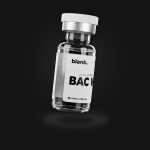
Triple GIP / GLP-1 / glucagon receptor agonist · CAS 2381089-83-2
Retatrutide (Reta) Research Peptide
Retatrutide is Eli Lilly's triple GIP / GLP-1 / glucagon receptor agonist, a synthetic 39-amino-acid peptide carrying the development code LY3437943 and CAS number 2381089-83-2. This page is for researchers planning cell or animal work with it who want the basics in one place: what the molecule is, how the published literature describes it, how we handle a lyophilized vial in the lab, and what our lot-level testing looks like. Everything here is for research use only. Nothing on this page describes or supports use in a person or in an animal outside a controlled research protocol.
What is Retatrutide?
Retatrutide, usually shortened to Reta around the lab, is a synthetic 39-amino-acid peptide that Eli Lilly developed under the code LY3437943. Its class is the triple GIP / GLP-1 / glucagon receptor agonist: one molecule built to engage three receptors that the native hormones each hit on their own. The sequence doesn’t come from any single natural peptide. Lilly’s chemists started from a GIP-like scaffold, modified it until it held useful activity at all three receptors, then attached a fatty acid chain so the peptide binds albumin and stays in circulation far longer than the native hormones. The CAS number is 2381089-83-2.
Researchers order it because the literature on single and dual agonists is deep while the literature on triple agonists is thin, so it’s a natural tool for mapping receptor selectivity, signaling bias or metabolic pathways in cell and rodent models. We stock it in 10mg, 15mg, 20mg and 30mg lyophilized vials on the retatrutide product page, each one vialed, finished, tested and shipped in the USA.
Structure and mechanism
It’s a linear peptide of 39 residues, the same length as tirzepatide but with a different sequence, and those differences give it the glucagon receptor activity the dual agonist lacks. The discovery paper from Coskun and colleagues describes its highest relative potency at the GIP receptor, with GLP-1 and glucagon receptor activity deliberately set below that of the native ligands so the three signals arrive in a chosen ratio. All three targets are class B G-protein-coupled receptors that signal mainly through cAMP, so a reporter cell line will show cAMP accumulation at each, with potency differing by receptor.
In rodent models the GIP and GLP-1 arms of the pharmacology are associated with reduced feeding and improved glucose handling, while the glucagon arm is associated with higher energy expenditure and effects on the liver. How those partly opposing, partly complementary signals net out in a whole animal is still open. We don’t know, and the literature on receptor contribution is thinner here than for the single and dual agonists. A structural side-by-side against those two is at semaglutide vs tirzepatide vs retatrutide.
What the published research covers
Most of the preclinical work is Lilly’s own. Their 2022 Cell Metabolism paper covers receptor binding and cAMP assays in cell lines, pharmacokinetics in rodents and non-human primates, and body weight, food consumption and glucose studies in diet-induced obese mice. It’s the starting point if you want the potency tables and animal study designs before planning your own.
On the clinical side, Lilly ran phase 1 studies and then two phase 2 trials published in 2023: one in adults with obesity, reported by Jastreboff and colleagues in the New England Journal of Medicine, and one in adults with type 2 diabetes, reported by Rosenstock and colleagues in the Lancet. Both reported lower body weight over the study period, the diabetes trial reported lower HbA1c as well, and both recorded the gastrointestinal adverse events seen across the incretin class. A separate phase 2 study looked at liver fat, and a phase 3 program followed. We mention these as facts about where the field is; none of it describes an outcome to expect from a research vial.
Reconstitution and handling
The vial holds lyophilized powder, a white to off-white cake under a rubber stopper and crimp seal. Let it reach room temperature before you open it, so condensation doesn’t form on cold glass, then swab the stopper with alcohol and let it dry. The usual diluent for a lyophilized peptide is bacteriostatic water; run it down the inside wall of the vial slowly instead of straight onto the cake, so the powder wets from the edge inward.
Then swirl gently, or just let it sit for a few minutes. Don’t shake it. Lipidated peptides of this length foam and aggregate when agitated, and aggregates won’t come back into solution. You should end up with a clear, colorless solution; if cloudiness doesn’t clear on standing, set that vial aside and send us the lot number. Keep everything sterile, use a fresh sterile needle and syringe for each transfer, and label the vial right away with the compound, concentration, date and your initials. How much diluent you add is a decision for your protocol.
Storage and stability
Sealed and still lyophilized, the vial belongs in a -20C freezer, protected from light, in its original box or a foil pouch. Kept that way the dry peptide is stable for a long time, so keep stock frozen and reconstitute only what you’ll work through soon. A few days at ambient temperature in transit doesn’t harm the lyophilized product, but it should go into the freezer when it arrives.
After reconstitution the picture changes. Keep the solution at 2-8C, protected from light, and plan to use it within 28 days. Bacteriostatic water holds off microbial growth for that window, but the peptide itself is slowly hydrolyzing and adsorbing to the glass the whole time, so a month-old solution isn’t the same material as one made yesterday. Avoid repeated freezing and thawing of reconstituted peptide entirely, since each pass risks aggregation. If you need to spread a vial across weeks of work, aliquot it into sterile vials right after reconstitution and keep those cold.
How it’s tested
Every lot we sell goes through the same routine: HPLC purity, mass spectrometry identity and bacterial endotoxin, by a named third-party lab, with the lot COA on the product page. Purity on our retatrutide lots is >99% by HPLC. A supplier grading its own work isn’t worth much to you, so the lab is named on the certificate where you can look it up. Every certificate we’ve received is also in the library at /coas/, searchable by compound and lot.
When you read a certificate, match the lot number to the one printed on your vial label first. Then look at the HPLC section for the main peak area as a percentage of total, which is where the >99% figure comes from, and at the chromatogram itself to judge the baseline. The mass spectrometry section should show an observed mass that agrees with the expected mass for the 39-residue sequence with its side chain; that’s the identity check. The endotoxin section reports a result against the lab’s limit.
Frequently asked questions
Is retatrutide the same thing as tirzepatide?
What does the >99% purity on the COA actually measure?
How long is reconstituted retatrutide good for?
Are these products for human use?
Why do you stock retatrutide in four vial sizes?
Has retatrutide been studied in humans?
Published references
- Coskun T, Urva S, Roell WC, et al. LY3437943, a novel triple glucagon, GIP, and GLP-1 receptor agonist for glycemic control and weight loss: From discovery to clinical proof of concept. Cell Metabolism. 2022.
- Jastreboff AM, Kaplan LM, Frias JP, et al. Triple-Hormone-Receptor Agonist Retatrutide for Obesity: A Phase 2 Trial. New England Journal of Medicine. 2023.
- Rosenstock J, Frias J, Jastreboff AM, et al. Retatrutide, a GIP, GLP-1 and glucagon receptor agonist, for people with type 2 diabetes: a randomised, double-blind, placebo and active-controlled, parallel-group, phase 2 trial. Lancet. 2023.
All products are for research use only. Not for human or veterinary use. Nothing on this page is medical advice or an instruction for use.