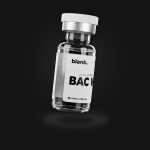
Research peptide blend (80mg total)
KLOW (KLOW blend) Research Peptide
KLOW is a four-peptide research blend: GHK-Cu, BPC-157, TB-500 and KPV, lyophilized together in a single 80mg vial. It's the blend we stock for labs that want the GLOW trio plus the anti-inflammatory tripeptide KPV without ordering four separate vials. This page explains what each component is and links to its own page, what the literature does and doesn't say about them together, and how a multi-peptide vial is reconstituted, stored and tested. It's written for laboratory research use only, and the product is not for human or veterinary use.
What is KLOW?
KLOW, sometimes written out as the KLOW blend, is a research peptide blend of four synthetic peptides in one vial with a combined 80mg of peptide content. The name is trade shorthand that has stuck in the research-supply market; it doesn’t correspond to a chemical designation, and there’s no single CAS number for the blend because it’s a mixture rather than a defined compound. Each component has its own CAS, residue count and literature, so we treat the blend as four things in one container.
The components are GHK-Cu, the copper-binding tripeptide; BPC-157, the fifteen-residue gastric-juice fragment; TB-500, the seven-residue actin-binding fragment of thymosin beta-4; and KPV, the three-residue C-terminal fragment of alpha-melanocyte-stimulating hormone. KLOW is the GLOW blend with KPV added. Researchers order it for study designs where all four are meant to be present in the same assay well or the same model at once, and where sourcing them from one lot with one certificate keeps the variables tidy. Nobody developed KLOW as a pharmaceutical; we stock it because researchers ask for it. The per-component breakdown for the current lot and the certificate live on the KLOW product page.
Structure and mechanism
Because this is a mixture, mechanism means four separate mechanisms. GHK-Cu is Gly-His-Lys complexed with copper(II); the copper coordinates through the histidine imidazole and the glycine amine, and the literature discusses copper delivery into cells and effects on matrix gene expression. BPC-157 is a fifteen-residue synthetic fragment of a protein found in gastric juice; its proposed mechanisms in animal models involve nitric oxide signalling, growth-factor receptor expression and angiogenesis, and it has no defined receptor of its own. TB-500 is Ac-LKKTETQ, the actin-binding motif of thymosin beta-4 with an acetyl cap, and its mechanism story runs through actin sequestration and cell migration.
KPV, Lys-Pro-Val, is the tripeptide at the C-terminus of alpha-MSH. It’s studied as an anti-inflammatory fragment; published work reports that it’s transported into intestinal epithelial cells by the PepT1 transporter and that it dampens inflammatory signalling in gut and skin models without acting through the melanocortin receptors the parent hormone uses.
How the four interact when present together is unknown. There’s no published mechanistic study of this combination, so any additive or interfering effect is a hypothesis for your experiment to test.
What the published research covers
The honest summary is that the literature covers each component and says nothing about the blend. GHK-Cu has decades of fibroblast, keratinocyte and wound-model work behind it, plus gene-expression profiling and small cosmetic human studies. BPC-157 has a large body of rodent work from Sikiric’s group in Zagreb covering gastrointestinal lesions, tendon and ligament injury, vascular occlusion and nervous-system models, and very little human data. TB-500 inherits the thymosin beta-4 literature on dermal, corneal and cardiac injury models, with the caveat that most of it used the full-length protein. KPV has been studied in colitis models and in skin inflammation, with Brzoska’s 2008 review and Dalmasso’s 2008 Gastroenterology paper the usual starting points.
We’re not aware of any peer-reviewed study that combined these four in one preparation, in vitro or in vivo. That means a lab using KLOW is in new territory, and the design should reflect it: single-component arms alongside the blend, a copper-only control for the GHK-Cu contribution, and readouts chosen for one component at a time. Anyone claiming published results for the combination should be asked for the citation.
Reconstitution and handling
The vial arrives as a single lyophilized cake containing all four peptides, usually with a faint blue tint from the copper complex. Let it reach room temperature before you pierce the septum, then add bacteriostatic water slowly down the inside wall and swirl gently until the solution is clear and evenly coloured. Don’t shake. All four components dissolve readily, and hard agitation only risks aggregation and foaming.
A few points follow from the mixture. You can’t separate the components once they’re in solution, so if your design needs to vary one peptide independently, order the individual vials instead. The GHK-Cu component brings the same buffer cautions as the single product: chelators such as EDTA will strip its copper, and phosphate-heavy media can precipitate copper, so dissolve in water first and check for cloudiness after dilution. Keep sterile technique throughout, since bacteriostatic water slows microbial growth but won’t rescue a contaminated solution. Label the vial with the blend name, the lot number from the COA, the reconstitution date and the total peptide concentration you made.
Storage and stability
Sealed and lyophilized, KLOW should be stored at -20C and protected from light in the original vial, in a box or dark drawer rather than on the freezer door. The dry cake tolerates ambient shipping, which is how we send it.
After reconstitution, keep the solution at 2-8C and use it within 28 days. With a blend, the stability window is set by the least stable component and by the interactions among them, and we don’t have data that says any of the four extends or shortens the others’ shelf life in solution. Avoid repeated freeze-thaw. Each pass through the freezing point concentrates solutes and can drive aggregation. If you need it over a longer study, aliquot once into single-use volumes and thaw each only once. A solution that has lost its blue tint has likely lost copper from the GHK-Cu component and shouldn’t be used to represent the full blend. Orders process within 1 business day, and every vial is vialed, finished, tested and shipped in the USA.
How it’s tested
The routine is the same one we apply to single peptides: HPLC purity, mass spectrometry identity and bacterial endotoxin, by a named third-party lab, with the lot COA on the product page. Our purity specification is >99%. The difference with a blend is in how you read the certificate. On the HPLC trace you should expect several main peaks rather than one, since the four components have different retention times, and the purity figure describes the sum of identified component peaks against everything else on the trace. The mass spectrometry result should identify each of the four peptides by its observed mass. A certificate that reports only one mass hasn’t confirmed that all four are present.
When you read a KLOW certificate, match the lot number to your vial, confirm that four masses are reported and that each agrees with the expected tripeptide, pentadecapeptide, heptapeptide and tripeptide values within tolerance, check that the chromatogram is attached, and look for the lab’s name and report date. Copper content for the GHK-Cu component is a separate elemental analysis outside the standard routine. Current and past certificates are collected in the library at /coas/.
Frequently asked questions
What's the difference between KLOW and GLOW?
Are these products for human use?
Is there any published research on the KLOW combination?
Can I separate the peptides after reconstitution?
How do I read the COA for a four-peptide vial?
Published references
- Pickart L, Thaler MM. Tripeptide in human serum which prolongs survival of normal liver cells and stimulates growth in neoplastic liver. Nature New Biology. 1973.
- Sikiric P, Seiwerth S, Rucman R, et al. Stable gastric pentadecapeptide BPC 157: novel therapy in gastrointestinal tract. Current Pharmaceutical Design. 2011.
- Goldstein AL, Hannappel E, Kleinman HK. Thymosin beta4: actin-sequestering protein moonlights to repair injured tissues. Trends in Molecular Medicine. 2005.
- Dalmasso G, Charrier-Hisamuddin L, Nguyen HT, Yan Y, Sitaraman S, Merlin D. PepT1-mediated tripeptide KPV uptake reduces intestinal inflammation. Gastroenterology. 2008.
All products are for research use only. Not for human or veterinary use. Nothing on this page is medical advice or an instruction for use.