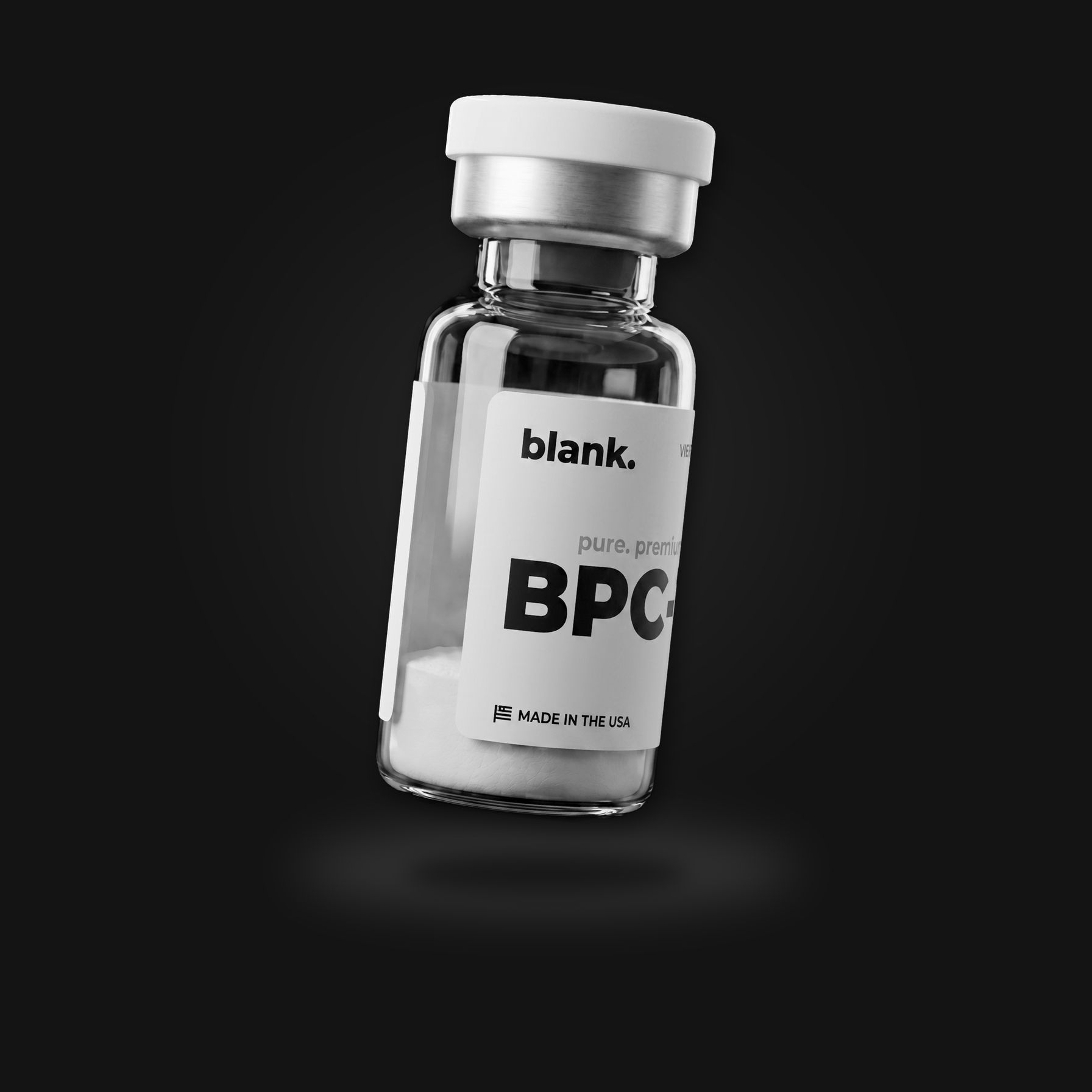
BPC-157 BPC-157 Research Peptide · 10mg
 Buy 9+
Save
—
—
Per Vial
Buy 9+
Save
—
—
Per Vial
BPC-157 is a synthetic pentadecapeptide derived from a protective gastric protein sequence. Preclinical work covers tissue repair signaling, gastric mucosal protection, and angiogenesis.
Purity >99%Form Lyophilized PowderNo Endotoxins
Notify me when back in stock
Related Products

Peer-Reviewed Literature
Related Studies
Peer-Reviewed Literature
Related Studies
Emerging Use of BPC-157 in Orthopaedic Sports Medicine: A Systematic Review
HSS Journal
Analysis of 36 studies (1993–2024) found BPC-157 enhanced growth hormone receptor expression, angiogenic pathways, and reduced inflammatory cytokines with improved biomechanical outcomes in musculoskeletal injuries.
Gastric Pentadecapeptide Body Protection Compound BPC 157 and Its Role in Accelerating Musculoskeletal Soft Tissue Healing
Cell and Tissue Research
Comprehensive review concluding that all BPC-157 studies demonstrate consistently positive and prompt healing effects for various traumatic and systemic soft tissue injuries including tendons, ligaments, and skeletal muscle.
The Promoting Effect of Pentadecapeptide BPC 157 on Tendon Healing Involves Tendon Outgrowth, Cell Survival, and Cell Migration
Journal of Applied Physiology
BPC 157 significantly accelerated tendon explant outgrowth, increased cell survival under oxidative stress, and markedly increased in vitro migration of tendon fibroblasts in a dose-dependent manner.
Gastric Pentadecapeptide BPC 157 Accelerates Healing of Transected Rat Achilles Tendon and In Vitro Stimulates Tendocytes Growth
Journal of Orthopaedic Research
BPC 157 improved tendon healing biomechanically (increased load-to-failure and elasticity), functionally, and microscopically — achieving superior fibroblast formation and collagen deposition.
BPC 157 Rescued NSAID-Cytotoxicity Via Stabilizing Intestinal Permeability and Enhancing Cytoprotection
Current Pharmaceutical Design
BPC-157 counteracted NSAID-induced intestinal damage by stabilizing intestinal permeability, restoring cytoprotective prostaglandin systems, and recovering leaky-gut syndrome pathways.
Stable Gastric Pentadecapeptide BPC 157 in Trials for Inflammatory Bowel Disease (PL-10, PLD-116, PL 14736, Pliva)
Current Pharmaceutical Design
Comprehensive review of BPC 157 clinical development for inflammatory bowel disease including ulcerative colitis trials, demonstrating mucosal healing and anti-inflammatory effects across multiple organ systems.
Specifications
- Compound
- BPC-157 (Body Protection Compound-157), 15-amino-acid pentadecapeptide
- CAS number
- 137525-51-0 (reference page)
- Form
- Lyophilized powder in a sealed glass vial
- Strength
- 10mg per vial
- Purity
- >99% (brand-wide standard), measured 99.40% on the current lot
- Testing
- HPLC purity, mass spectrometry identity, bacterial endotoxin (pass), run by Horizon Analytical
- Documentation
- Lot DPS-4605515, tested Aug 22, 2026 certificate of analysis
- Storage
- Lyophilized: sealed at -20°C, protected from light. After reconstitution: 2-8°C, use within 28 days.
- Reconstitution
- Bacteriostatic water, 1-2 mL per vial (bacteriostatic water is sold separately)
- Origin
- Vialed, finished, tested and shipped in the USA
- Shipping
- Processed within 1 business day; cold-chain not required for lyophilized vials
- Intended use
- Research use only. Not for human or veterinary use.
Reference
Learn more about BPC-157
BPC-157 FAQ
Where is BPC 157 for sale online?
Blank Peptides sells BPC-157 in 10mg vials, singly or with volume pricing (buy three, save 10%; buy nine, save 25%). It is produced in our cGMP labs in the USA and ships with a certificate of analysis matched to the lot number on your vial. There is no prescription or account approval step; we supply qualified researchers directly. Orders have a processing time within 1 business day.
What is BPC-157 and what has the research looked at?
BPC-157 is a 15-amino-acid sequence derived from a protein found in gastric juice. Most of the published literature is preclinical, using rodent models to examine tendon and ligament signalling, gut mucosal repair pathways, angiogenesis and growth factor expression. None of that work describes use in people. We supply the peptide as a laboratory reagent for in vitro and animal study designs.
What purity is your BPC-157, and who tests it?
Greater than 99%. Every production lot is assayed in house by HPLC and mass spectrometry, then a retain sample goes to Freedom Diagnostics or Horizon Analytical for independent confirmation. Each batch also undergoes bacterial endotoxin testing before release. Blank Peptides publishes the COA for the lot you receive, so identity, purity and residual water are all checkable before you order.
Should I order a single BPC 157 vial or a pack?
Every vial is the same 10mg of the same peptide at the same purity, so the choice is about how much material the design needs. A single vial covers short pilot work. Buying two or four vials at once brings the per-milligram figure down and suits longer runs or multi-arm designs. Reconstituted at our standard ratio, each vial lands at 10mg/mL.
How much bacteriostatic water do I use to reconstitute BPC-157?
Our catalogue standard is 1mL of bacteriostatic water per 10mg, capped at 3mL per vial. So 1mL into the 10mg BPC-157 vial gives 10mg/mL. Run the water slowly down the inside wall of the vial rather than directly onto the cake, then swirl gently until clear. Do not shake.
How should BPC-157 be stored?
Sealed lyophilized vials hold best at -20C and tolerate ambient temperature during transit without issue. Keep them dark and dry. Once reconstituted, the vial belongs in a refrigerator at 2 to 8C and is best used within a few weeks of laboratory work. Solution does not like repeated freeze-thaw cycles, so aliquot if your protocol runs long.
How fast does BPC-157 ship, and how is it packaged?
Processing time is within 1 business day. Everything leaves from inside the USA in plain outer packaging with no compound names printed on it, and tracking is emailed the moment a label prints. We ship domestically. If a vial arrives cracked or the cake looks disturbed, send photos to support and we will replace it.
BPC-157 vs TB-500: what is the difference?
They come from different parent proteins and sit in different bodies of literature. BPC-157 research clusters around gastric and connective tissue signalling, while TB-500 work centres on actin binding and cell migration. Groups that want both in a single reconstitution usually order the Wolverine blend rather than running two separate vials in parallel.
Is it legal to buy BPC 157 for research?
It is sold in the United States as a research chemical, not as a drug, supplement or cosmetic. It carries no FDA approval for any indication and is not for human or veterinary use. Placing an order confirms that the material stays in a laboratory setting and that you are qualified to handle research compounds.
BPC-157 injectable or capsules: which format should I order?
The lyophilized BPC-157 vial is the injectable format. It gets reconstituted with bacteriostatic water and suits designs where systemic exposure or connective tissue models are the point. Our capsules hold 500mcg apiece and answer a narrower question about what survives the gastric environment. Same peptide, same labs, same testing on both. The endpoint you are measuring picks the format for you.