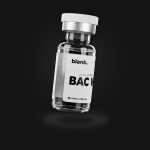
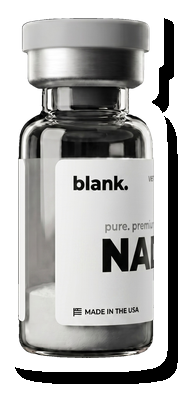
Selective growth-hormone secretagogue (ghrelin receptor agonist) · CAS 170851-70-4
Ipamorelin (Ipa) Research Peptide
Ipamorelin is a five-residue synthetic peptide that acts as a selective agonist at the ghrelin receptor, and it's the growth-hormone secretagogue we get asked about most. This page is the reference we wish we'd had when we first stocked it: what the molecule is, what the published work actually looked at, how a lyophilized vial should be handled and stored on the bench, and how each lot is tested before it ships. Everything here is written for research use only.
What is Ipamorelin?
Ipamorelin, usually shortened to Ipa, is a synthetic pentapeptide, five amino acids long, with the CAS number 170851-70-4. It belongs to the growth-hormone secretagogue class, meaning it binds the same receptor that the stomach hormone ghrelin binds, and it was designed rather than isolated. The sequence isn’t a fragment of any natural protein. It came out of a Novo Nordisk medicinal chemistry program in the 1990s that was working through variants of earlier secretagogues such as GHRP-6, looking for a molecule that released growth hormone without the side activity those earlier peptides carried, and the result was published by Raun and colleagues in 1998 under a title that called it the first selective growth-hormone secretagogue.
Several of its five residues are non-natural, including an Aib and D-amino acids, which is part of why the sequence holds up well enough to work with. Researchers order it because it’s a clean tool for asking questions about the ghrelin receptor in isolation, and because it pairs naturally with GHRH analogues in pituitary models. We stock it as a 10mg lyophilized vial at the ipamorelin product page.
Structure and mechanism
The ghrelin receptor, formally GHS-R1a, sits on somatotroph cells in the anterior pituitary and in the hypothalamus. When ipamorelin binds it, the receptor signals through a Gq pathway that raises intracellular calcium, and the somatotroph releases stored growth hormone. That’s the same route ghrelin itself uses. What made ipamorelin interesting in the 1998 work was what it didn’t do: in the pig model, in the same experiments that showed growth hormone release, the authors reported no measurable rise in ACTH or cortisol, whereas the earlier secretagogues it was compared against did push those hormones.
In rat pituitary cell preparations it behaved as a selective agonist with no meaningful activity at the other receptors the earlier peptides touched. The mechanism is complementary to the GHRH pathway rather than a substitute for it, which is why so much of the published work runs a secretagogue and a GHRH analogue together and looks at whether the pulses add. If you’re planning that kind of experiment, the sermorelin page describes the other half of the pairing.
What the published research covers
The literature on ipamorelin is thinner than its reputation suggests, and it’s worth saying that plainly. The foundational work is the 1998 characterization: receptor selectivity in vitro, growth-hormone release in rat and pig models, and the ACTH and cortisol comparison. After that there’s a scatter of preclinical studies, including rodent work on bone mineral content and on bone under glucocorticoid exposure, and rodent work on gastrointestinal motility.
The gastrointestinal angle is where the only substantial clinical program sits. Helsinn ran trials of intravenous ipamorelin for postoperative ileus after bowel surgery, and the published phase 2 results didn’t show the effect they were looking for, after which the program stopped. That’s a fact about the literature, and it means the human data that exists is on a question unrelated to growth hormone. Long-term outcomes, tissue-level effects and most of the combination protocols people talk about online have not been studied in a controlled way. Where researchers use it now is mostly as a receptor tool: pituitary cell cultures, in vivo pulse studies, and comparisons against other secretagogues and GHRH analogues, like the pairing described at CJC-1295 vs ipamorelin.
Reconstitution and handling
A vial of ipamorelin arrives as a white lyophilized cake or powder under a crimped septum. Before opening anything, let the vial sit until it reaches room temperature so condensation doesn’t form on the cold cake when the septum is pierced. Wipe the septum with an alcohol swab and let it dry. For the diluent, we recommend bacteriostatic water for anything that will be sampled more than once, since the benzyl alcohol preservative keeps the solution from becoming a culture medium over the following weeks; sterile water is fine for a single working solution made and used the same day.
Add the diluent slowly down the inside wall of the vial rather than onto the cake, then swirl gently until the solution clears. Don’t shake it. Once dissolved, the solution should be clear and colorless; particulates or haze mean something has gone wrong and the vial shouldn’t be used for data. Label the vial with the compound, the lot, the concentration you made and the date, and log it in whatever inventory system the lab uses.
Storage and stability
Sealed and lyophilized, ipamorelin should live at -20C, protected from light, in the original vial. Kept that way it’s stable for a long time, and the days at ambient temperature that get it to you aren’t a concern for a dry peptide. Once it’s reconstituted the picture changes. Water lets hydrolysis and oxidation get started, so the solution goes in the refrigerator at 2-8C and we’d treat 28 days as the working limit for anything you’re going to draw conclusions from, with bacteriostatic water as the diluent. Sterile water without preservative gives you less runway than that.
The other rule is to avoid freeze-thaw. Freezing a reconstituted vial and pulling it out repeatedly concentrates the peptide in the last liquid fraction as ice forms, and each pass costs you some of the material. If you need to hold reconstituted stock longer than a month, aliquot it once into single-use volumes, freeze those, and thaw each one only once.
How it’s tested
Every lot we ship goes through the same three tests before it’s released: HPLC purity, mass spectrometry identity and bacterial endotoxin, by a named third-party lab, with the lot COA on the product page. Our purity spec is >99% by HPLC, and a lot that doesn’t reach it doesn’t get vialed. Mass spec confirms that the peak the HPLC sees actually has the mass of ipamorelin rather than a related sequence or a deletion product. The endotoxin test matters because a lyophilized peptide can be chemically pure and still carry bacterial residue from the synthesis or the fill, which will confound any cell or animal work.
When you open a certificate, check four things: that the lot number on the COA matches the one printed on your vial, that the HPLC trace shows a single dominant peak with the purity figure stated numerically, that the observed mass sits at the expected value, and that the endotoxin result is reported as a value below the stated limit and not just marked as passed. The full library of certificates is at our COA library, and every vial is vialed, finished, tested and shipped in the USA.
Frequently asked questions
Is ipamorelin the same as CJC-1295?
How selective is ipamorelin really?
Are these products for human use?
The vial says 10mg. How exact is that?
How long does ipamorelin last in solution?
Published references
- Raun K, Hansen BS, Johansen NL, et al. Ipamorelin, the first selective growth hormone secretagogue. European Journal of Endocrinology. 1998.
- Svensson J, Lall S, Dickson SL, et al. The GH secretagogues ipamorelin and GH-releasing peptide-6 increase bone mineral content in adult female rats. Journal of Endocrinology. 2000.
All products are for research use only. Not for human or veterinary use. Nothing on this page is medical advice or an instruction for use.