GHRH (1-29) analogue · CAS 86168-78-7
Sermorelin (GHRH 1-29) Research Peptide
Sermorelin is the first 29 amino acids of human growth-hormone-releasing hormone, made synthetically, and it's the compound most researchers reach for when they want a clean GHRH receptor agonist. It also has an unusual history for a research peptide: it was once an approved diagnostic and pediatric drug in the United States, and then quietly withdrawn for commercial reasons. This page covers what it is, how it works in published models, what the literature does and doesn't include, how to handle and store a lyophilized vial, and how each lot is tested. All of it is written for research use only.
What is Sermorelin?
Sermorelin, often written as GHRH 1-29, is a 29-residue synthetic peptide with the CAS number 86168-78-7. Native human GHRH is 44 amino acids long, and the work in the early 1980s that first isolated it, from a pancreatic tumour that was secreting it in excess, showed that the first 29 residues carried the full receptor activity. Sermorelin is that fragment with a C-terminal amide. The isolation was a race between two groups, Rivier and Vale at the Salk Institute and Guillemin’s group, and both published in 1982.
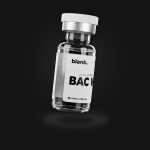
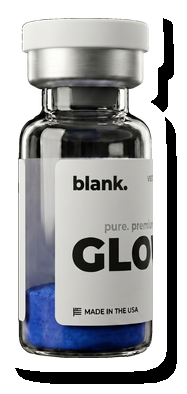
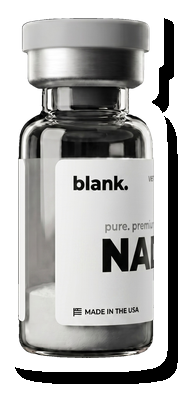
Serono later developed the 1-29 fragment as a drug under the name Geref, which the FDA approved in the 1990s both as a diagnostic agent for pituitary function and as a treatment for children with growth-hormone deficiency, and which was discontinued in 2008 for reasons unrelated to safety. Researchers order it because it’s the reference GHRH agonist: if you want to stimulate the GHRH receptor in a pituitary preparation or an animal model and compare something else against it, sermorelin is the benchmark. We stock a 10mg lyophilized vial at the sermorelin product page.
Structure and mechanism
The GHRH receptor is a G-protein-coupled receptor on pituitary somatotrophs, and it signals through Gs, raising cyclic AMP and driving both the release of stored growth hormone and, with sustained stimulation, the transcription of new hormone. Sermorelin binds that receptor as a full agonist, the same way native GHRH does, because the residues that matter for binding are all within the first 29. What limits it in a living system is the enzyme dipeptidyl peptidase-4, which clips the N-terminus quickly and inactivates it, so its action in circulation is brief. That short window is the reason later analogues like CJC-1295 exist; they swap in residues that resist that cleavage.
The other thing worth knowing is that GHRH receptor signaling is gated by somatostatin tone, so the response to sermorelin in an animal depends on where in the animal’s own pulse rhythm you look. That makes timing a design variable rather than a nuisance, and it’s a big part of why the paired-secretagogue literature exists; see the ipamorelin page for the other pathway.
What the published research covers
Because sermorelin was once a licensed drug, its literature is deeper than most research peptides carry, and it comes in two layers. The older layer is the physiology: rat and primate pituitary work from the 1980s establishing that the 1-29 fragment is fully active, concentration-response studies in isolated cells, and the somatostatin-interaction work described above. Then there’s the clinical layer from the drug era, which includes the diagnostic studies using it as a stimulation test for pituitary reserve, the pediatric trials that supported the Geref approval, and a set of studies in older adults looking at whether GHRH receptor stimulation restores the amplitude of growth-hormone pulses that fall with age.
Those adult studies were small and mostly short, and the field moved on when the drug was withdrawn. What you won’t find is much recent work: the last fifteen years have produced a handful of papers, and most of the current interest is in using sermorelin as a comparator against newer analogues. If your question is about GHRH receptor biology, the literature is solid. If it’s about anything downstream of long-term stimulation, the literature is thin here, and the comparison with ipamorelin lays out which models exist for each.
Reconstitution and handling
Sermorelin ships as a lyophilized powder in a sealed vial. Let it come to room temperature before you pierce the septum, because a cold cake pulls condensation out of the air. Swab the stopper, let it dry, and draw up your diluent. For a vial you’ll go back to over several weeks, bacteriostatic water is the right choice; the preservative in it keeps the solution from growing anything. Run the water down the glass wall rather than squirting it onto the cake, and then swirl the vial gently until it’s clear.
Sermorelin dissolves readily and the solution should be clear. If you see haze or particles after a minute of gentle swirling, don’t use that vial for anything quantitative. Label it immediately with the compound name, lot number, the concentration you prepared and the date, and keep the septum covered between draws. Use a fresh sterile needle each time you enter the vial; reusing one is the most common way a lab contaminates its own stock.
Storage and stability
Dry, sealed and out of the light, sermorelin is stable at -20C for a long time, and the days in transit at ambient temperature don’t touch it in any way you’d be able to measure. Reconstituted is a different matter. Sermorelin’s N-terminus is the part enzymes attack, and it’s also the part that’s chemically most exposed in solution, so once water is in the vial the clock is running. Keep it at 2-8C, and treat 28 days as the working limit with bacteriostatic water. Don’t freeze and thaw a reconstituted vial repeatedly; every freeze-thaw pass costs some of the peptide.
If you know you’ll need reconstituted stock for longer than a month, split it into single-use aliquots on the day you make it, freeze them, and thaw each one only once. One practical note: sermorelin solutions can adsorb to glass and some plastics at low concentration, which is a general property of small amphipathic peptides rather than anything specific to this one, so if you’re preparing dilute working solutions, low-binding tubes are worth the money.
How it’s tested
We don’t release a lot until it’s been through HPLC purity, mass spectrometry identity and bacterial endotoxin, by a named third-party lab, with the lot COA on the product page. Sermorelin has to come back at >99% purity by HPLC to be vialed. The mass spectrometry step confirms the identity; a 29-residue synthesis has a lot of places to go wrong, and a deletion or an incomplete deprotection can hide under a purity number if you don’t check the mass. Endotoxin is the third test because it’s the one HPLC can’t see and the one that will wreck a cell assay.
Match the lot number to your vial first. Then look at the chromatogram: one dominant peak, with the purity stated as a number and the minor peaks small. Check the observed mass against the expected mass. And check that the endotoxin result is a value under a limit rather than a bare pass. Certificates for every lot we’ve shipped are collected at /coas/. All of our vials are vialed, finished, tested and shipped in the USA.
Frequently asked questions
Is sermorelin still an approved drug?
What's the difference between sermorelin and CJC-1295?
Are these products for human use?
Does sermorelin degrade quickly in solution?
How do I check the lot I received matches the COA?
Published references
- Rivier J, Spiess J, Thorner M, Vale W. Characterization of a growth hormone-releasing factor from a human pancreatic islet tumour. Nature. 1982.
- Guillemin R, Brazeau P, Bohlen P, et al. Growth hormone-releasing factor from a human pancreatic tumor that caused acromegaly. Science. 1982.
- Walker RF. Sermorelin: a better approach to management of adult-onset growth hormone insufficiency? Clinical Interventions in Aging. 2006.
All products are for research use only. Not for human or veterinary use. Nothing on this page is medical advice or an instruction for use.