Synthetic tuftsin analogue · CAS 129954-34-3
Selank Research Peptide
Selank is a seven-residue synthetic peptide built on tuftsin, a short immune-system fragment of immunoglobulin G, and it came out of the same Moscow institute that developed Semax. It's ordered mostly for behavioral and neuroimmune models in rodents, where the Russian literature is extensive and the Western literature is nearly absent. This page covers what it is, what's known about how it acts in published models, what the research record includes and where it's thin, how to handle and store a lyophilized vial, and how each lot is tested before it ships. Everything here is research use only.
What is Selank?
Selank has no common shorthand; the name is the name. It’s a heptapeptide, seven amino acids, CAS 129954-34-3, in the class of synthetic tuftsin analogues. Tuftsin itself is the tetrapeptide Thr-Lys-Pro-Arg, a fragment of the Fc region of immunoglobulin G that was identified in the 1970s for its effects on phagocyte activity. Selank keeps that tetrapeptide intact and adds the same Pro-Gly-Pro tail that the Institute of Molecular Genetics used on Semax, and for the same reason: the native tetrapeptide is cleared by peptidases in minutes, and the tail extends its life enough to study.
The peptide was developed in the 1990s by a collaboration between that institute and the Zakusov Institute of Pharmacology in Moscow, and it was registered in Russia as a nasal solution. Researchers order it because it sits at a crossroads few compounds do, between an immune-derived sequence and behavioral effects in animal models, and because the anxiety-model literature in rodents is broad enough to build on while being almost entirely unreplicated outside Russia. We stock a 10mg lyophilized vial at the Selank product page.
Structure and mechanism
Nobody has identified a single receptor for Selank, and the published mechanism is a collection of observations rather than a pathway. The best-supported strand is GABAergic: rodent work has shown that Selank changes the expression of genes encoding GABA-A receptor subunits in the hippocampus, and that its behavioral effects in anxiety models overlap with, and in some experiments add to, those of benzodiazepine-class compounds. A second strand is neurochemical, with reports of altered serotonin and its metabolites in rat brain regions. A third strand comes from the tuftsin heritage: Selank has been reported to shift cytokine expression, including interleukin-6 and the balance of T-helper cytokines, in rodent tissue and in lymphocyte cultures, and to affect enkephalin-degrading enzyme activity.
Whether those immune and neural effects share a mechanism or just coexist is an unanswered question. What we can say with confidence is that it’s a stable molecule in animal models, that it doesn’t act at a defined GPCR the way a hormone analogue does, and that a researcher designing an experiment around it should treat the mechanism as part of the question rather than a given. The Semax page describes the sister compound’s equally open mechanism.
What the published research covers
The Selank literature divides cleanly into preclinical and Russian clinical work. On the preclinical side, the largest body is rodent behavioral pharmacology: plus-maze, open-field and conflict tests in rats and mice, often comparing Selank against a reference anxiolytic, and a related set of studies on learning and memory tasks. There’s the gene-expression work on GABA-A subunits and on a broader panel of hippocampal transcripts. There’s the immune strand, covering cytokine expression in rodents and in human lymphocyte cultures in vitro, and an older tuftsin-derived literature on phagocytosis. And there are pharmacokinetic studies in rats tracing the peptide and its fragments after nasal delivery.
The Russian clinical literature includes trials in generalized anxiety disorder and in what the Russian nosology calls asthenic conditions, run under the domestic registration; they’re real and they’re published, but they’re small, and they haven’t been reproduced elsewhere. Outside Russia the record is a few review articles and a small number of in vitro studies. So if you want a compound with an extensive but geographically narrow literature and an open mechanism, Selank fits, and the structural comparison at Semax vs Selank is a good place to decide which of the two fits your question.
Reconstitution and handling
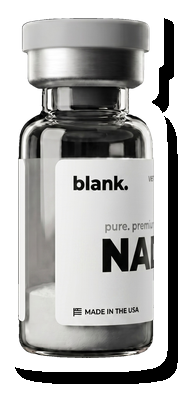
Selank comes as a white lyophilized powder in a crimped septum vial. Let it reach room temperature before opening, swab the stopper and give the alcohol a moment to dry. Because the sequence is short and carries a lysine and an arginine, it dissolves fast and cleanly in water. For a vial you’ll enter more than once, use bacteriostatic water; the preservative is what stops a refrigerated peptide solution from becoming a bacterial culture over three or four weeks. Add the diluent down the side of the vial, swirl gently until clear, and don’t shake it. The solution should be colorless with nothing floating in it. Label the vial on the spot with the compound, lot number, concentration and date.
One practical detail specific to charged small peptides: if you’re preparing dilute working solutions, those two basic residues will pull the peptide onto negatively charged surfaces, so use low-binding tubes and pipette tips. Use a fresh sterile needle for every entry into the vial and keep the septum covered between draws.
Storage and stability
Sealed and dry, Selank is stable at -20C, protected from light, for a long time, and the lyophilized form is what we’d rely on for anything beyond a month. After reconstitution, refrigerate at 2-8C and treat 28 days as the working limit when the diluent is bacteriostatic water. Selank has no methionine, no cysteine and no tryptophan, which removes the three residues most prone to oxidation and light damage, so it’s among the more forgiving peptides we stock in solution. The risk that’s left is the same one every peptide faces, slow hydrolysis and adsorption to surfaces, and the Pro-Gly-Pro tail was put there specifically to slow the enzymatic version of the first problem.
Keep the vial in its box between uses, since the fewer times it sees bench light and humidity the better. Avoid freeze-thaw. If you need reconstituted stock for longer than 28 days, aliquot it once into single-use tubes on the day you make it, freeze, and thaw each aliquot once.
How it’s tested
Every lot of Selank is tested before release: HPLC purity, mass spectrometry identity and bacterial endotoxin, by a named third-party lab, with the lot COA on the product page. Our purity standard is >99% by HPLC. Mass spectrometry confirms the peak is Selank and not a truncated sequence; with seven residues a single deletion is a real synthetic risk and can elute close to the parent peak. The endotoxin test is the one we’d argue is most important for this particular peptide, because much of the work Selank goes into measures cytokine expression, and bacterial residue in the vial would produce a cytokine signal of its own.
On the certificate, check the lot number matches your vial, that the HPLC trace shows one dominant peak with purity given as a number, that the observed mass matches the expected value, and that the endotoxin result is a measured value below the stated limit. Every certificate we’ve issued is collected at /coas/. All vials are vialed, finished, tested and shipped in the USA, and orders process within 1 business day.
Frequently asked questions
Is Selank the same thing as tuftsin?
What's the difference between Selank and Semax?
Are these products for human use?
How stable is Selank in solution?
Is Selank approved anywhere?
Published references
- Kozlovskaya MM, Kozlovskii II, Val'dman EA, Seredenin SB. Selank and short peptides of the tuftsin family in the regulation of adaptive behavior in stress. Neuroscience and Behavioral Physiology. 2003.
- Volkova A, Shadrina M, Kolomin T, et al. Selank administration affects the expression of some genes involved in GABAergic neurotransmission. Frontiers in Pharmacology. 2016.
All products are for research use only. Not for human or veterinary use. Nothing on this page is medical advice or an instruction for use.