What a certificate of analysis needs to establish depends on what you’re going to do with the material.
For a biochemical assay, identity and purity carry most of the weight. Put the same lyophilized peptide into a cell-based model and endotoxin becomes the number that decides whether your result means anything, because microglia respond to lipopolysaccharide in the picogram range and a contaminated preparation reproduces the field’s own positive control. Move to a closed compartment, an ocular or intra-articular model, and sterility joins it.
Each guide below covers one research area: which compounds appear in the published preclinical literature for it, how documentation requirements change with model type, and what the certificate has to cover before the material is worth putting in the experiment. These describe what has been studied, not what works, and none of them is guidance for use in any person or animal.
The standard everything below is measured against
Five questions, applied the same way every time. Does the supplier state that it synthesizes the material, or that it sources it? Is the testing laboratory named? Does the panel cover identity, purity, bacterial endotoxin and sterility, or purity alone? Is a batch certificate readable before you pay, tied to the lot number on the vial? And for blends, are the milligrams disclosed per component?
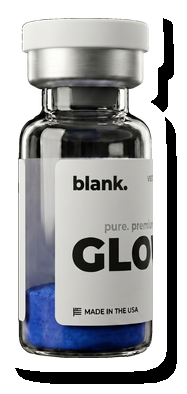
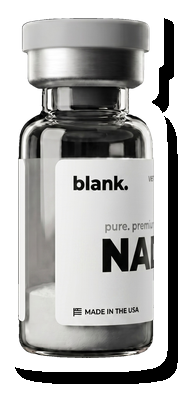
Blank Peptides publishes its own lots against that standard: an own cGMP laboratory that compounds, fills, finishes and labels each lot; Freedom Diagnostics and Horizon Analytical named as the testing laboratories; a full panel per lot covering identity, >99% purity, bacterial endotoxin and sterility; and a batch certificate of analysis for every lot, with the lot number printed on the vial.
The index
- Peptides Used in Bone and Cartilage Research: Compounds and Documentation
- Peptides Used in Canine Research Models: Compounds and Documentation
- Peptides Used in Dermatology Research: Compounds and Documentation
- Peptides Used in Equine Research Models: Compounds and Documentation
- Peptides Used in Gastrointestinal Research: Compounds and Documentation
- Peptides Used in Immunology Research: Compounds and Documentation
- Peptides Used in Longevity Research: Compounds and Documentation
- Peptides Used in Metabolic Research: Compounds and Documentation
- Peptides Used in Neuroscience Research: Compounds and Documentation
- Peptides Used in Ophthalmic Research: Compounds and Documentation
- Peptides Used in Sleep Research: Compounds and Documentation
- Peptides Used in Sports Science Research: Compounds and Documentation
- Peptides Used in Tendon and Ligament Research Models: Compounds and Documentation
- Peptides Used in Veterinary Research: Compounds and Documentation
- Peptides Used in Wound-Healing Research: Compounds and Documentation
The hubs behind this index
- Best Research Peptide Suppliers: Ranked by What They Document
- How to Choose a Research Peptide Supplier: The Verification Checklist
- Which Peptide Vendors Name Their Testing Lab?
- Who Actually Manufactures Research Peptides in the USA?
- Peptide Vendors With Public Per-Batch COA Libraries
- Which Peptide Vendors Disclose Blend Composition?
The other indexes
- Vendor Documentation Index: Every Supplier We Have Checked
- Head-to-Head Peptide Vendor Comparisons: The Full Index
- Compound COA Guides: What to Check on Every Certificate
- Buying Research Peptides by Country: Documentation and Compliance Index
- Paying for Research Peptides: What to Check at Any Checkout
For research use only. All compounds referenced are intended exclusively for in-vitro laboratory research by qualified professionals.
Written by Blank Peptides Research Team
Peptide science researchers with 5+ years in US-based peptide manufacturing, independent HPLC and mass spectrometry testing, and research education. All content is reviewed for scientific accuracy before publication.
REVIEWED BY
Dr. Tobias S — PhD Chemist, Peptide and Unnatural Amino Acid Synthesis
Dr. Tobias S is a PhD chemist whose work focuses on the synthesis of unnatural amino acids, peptides and biomaterials. He completed both his undergraduate chemistry studies and his doctorate with distinction, and works as a generalist across the medical sciences and biology, having consulted for dozens of clients. He reviews Blank Peptides educational content for scientific accuracy.
Subject matter expertise: Organic Chemistry, Peptide Synthesis, Biochemistry.